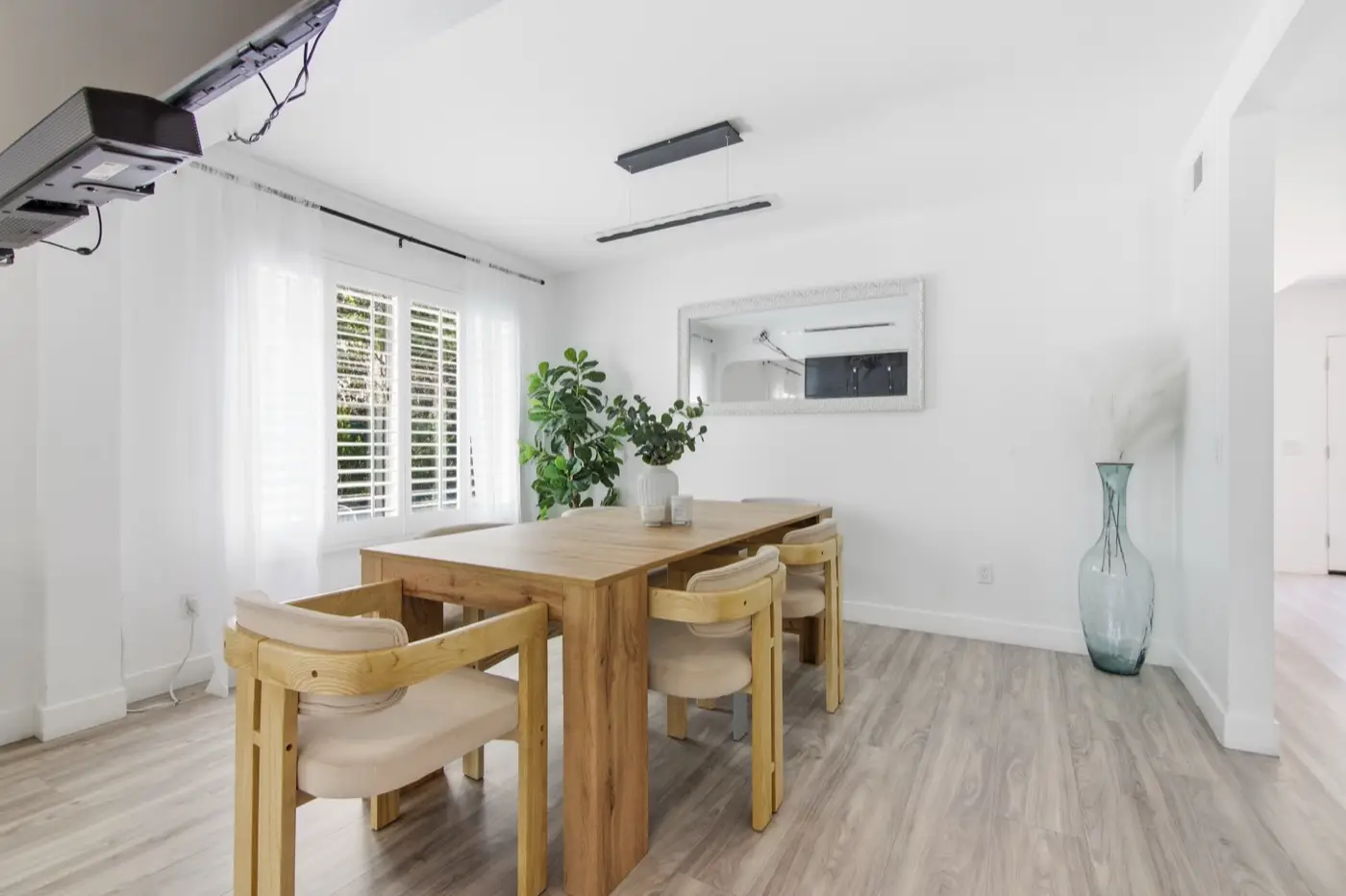

Why a straight cash offer leaves equity behind, and how a funded renovation before listing can put six figures more in my pocket.
In this post
- Why a Cash Offer Often Leaves Equity Behind
- The Repair Trap: Why Owners Sell for Less Than They Should
- Your Three Options, Side by Side
- How a Funded Renovation Works, Step by Step
- A Real Example: A Minnesota Condo
- What I Learned in Other People’s Living Rooms
- Which Path Fits You?
- The Honest Trade Offs
- Find Out What Your House Could Bring
- Conclusion
- About the Author
TL;DR
- A cash offer is fast, but the buyer keeps the upside your repairs would create.
- A funded renovation pays for the work up front, up to $150,000. You repay it from the sale proceeds at closing.
- You list the improved house. Homeowners I work with typically capture $100,000 to $150,000 in equity that a cash offer would have left behind. Results vary by house.
To get the most money for your house without paying for the work, sell it through a funded renovation. An investor pays for the repairs up front. You repay them from the sale proceeds at closing. You keep the equity a cash offer would leave behind.
Most owners never hear about this option. They get a cash offer, see a repair list, and assume those are the only two doors. There is a third one. This guide shows how it works, what it costs, and who it fits.
I am writing this as someone who has bought more than 1,000 homes across Southern California. I know what cash buyers pay. I also know what the same houses sell for after the work is done. The gap between those two numbers is what this article is about.
Why a Cash Offer Often Leaves Equity Behind
A cash buyer does the math before making an offer. They start with what the house could sell for once it is fixed. Then they subtract the repair bill, their costs and their profit. What is left is your offer.
Rehabbing means buying a house in disrepair, fixing it up, and reselling it (Scott, 2013). The profit lives in the gap between what the investor pays and what the finished house sells for. That is a fair business. But it means the gap goes to the buyer, not to you. On a house with real equity, that gap can be large.
What “The Most Money” Really Means
The most money is not the highest offer. It is what lands in your account after closing. Count the repairs, the commission, the carrying costs and the time. Then compare each path on that final number.
Gallinelli (2016) makes a similar point for investors. Decisions to buy and sell should rest on financial measures and returns, not on sentiment. That advice works for homeowners too. Run the numbers on every path before you sign anything.
The Repair Trap: Why Owners Sell for Less Than They Should
Most owners I meet are not lazy. They are stuck. The house needs work. The work costs cash. And the cash is locked inside the house.
These are the gaps I see most often:
- Kitchens and bathrooms that have not been touched in decades
- Worn flooring, tired paint and dated fixtures
- Roof, plumbing or electrical items that a buyer’s inspector will flag
- Findings such as termite or foundation issues that stall escrow
Each one lowers the price a buyer will pay. Together, they can push a fair market house into cash offer territory.
Repairs Do Not Get Cheaper While You Wait
Investors have a name for skipped upkeep: deferred maintenance. Gallinelli (2016) calls it a polite term for letting a property go, with someone paying for the repairs sooner or later. The longer the repairs wait, the higher the cost climbs.
Buyers know this. In my experience, they price it in with room to spare. So waiting does not save you money. It just hands the discount to someone else.
Banks Rarely Pay for Repairs
You might ask about a loan. Scott (2013) explains that very few traditional loans cover rehab costs. The ones that do are hard to get through underwriting. His example is a $100,000 property with $30,000 of rehab. The $30,000 comes out of your pocket.
Scott wrote for investors, but the lesson holds for owners too. Lenders fund the house. They rarely fund the work that makes it worth more.
Your Three Options, Side by Side
Most sellers can choose from three paths. Here is how they compare.
| Sell as is for cash | Repair it yourself, then list | Funded renovation, then list | |
|---|---|---|---|
| Cash you pay up front | None | All repair costs | None. I fund the work |
| Who repays the work | No one. The buyer absorbs it | You, from savings | You, from sale proceeds at closing |
| Commission | None | Listing commission | Listing commission |
| Speed | About 21 days to close | Depends on the work and the market | Depends on the work and the market |
| Equity you keep | The price after the buyer’s discount | The full sale price, minus your costs | The full sale price, minus repayment and commission |
| Best fit | Speed matters most | You have cash and time | You want top dollar and lack the cash |
How a Funded Renovation Works, Step by Step
The process is simple. Here is what happens when you work with me:
- We walk the house. I look at condition, layout and the local market.
- I compare two numbers. One is your best cash offer. The other is what the finished house could sell for.
- We agree on a scope. If the second number wins by enough, I fund the renovation, up to $150,000, with a capital partner.
- The work gets done. You do not pay a contractor.
- I list the finished house. I act as your listing agent.
- You close. The renovation cost is repaid from the sale proceeds. You receive what is left, after commission.
If the numbers say a cash offer is the better move, I will tell you that too.
A Real Example: A Minnesota Condo
One Minnesota condo shows the gap. A $36,000 renovation helped the unit sell for $575,000. That was roughly $100,000 more than the best cash offer on the table.
Your house is different, and results vary. But the pattern is the point. A modest repair budget can move a sale price by more than the budget costs. A cash buyer sees that. They just do not share it with you.
What I Learned in Other People’s Living Rooms
I grew up in the San Fernando Valley. I have spent 11 to 12 years in this business. Most of what I know, I learned at kitchen tables, not in classrooms. I sat with owners who were tired, behind, or just done with the house.
Here is what I noticed. Most owners get one offer and think that is the market. They never see the other doors. Value is also a matter of opinion. Chavis (2017) notes that the bank, the seller, the appraiser and the investor can each hold a different view of what a property is worth. One offer is never the whole story.
The Count Your Options Test
Before you decide, count how many real options you have. For most houses, they look like this:
- A cash offer, as is
- Repairs with your own money, then a listing
- A funded renovation, then a listing
If you can only name one, you are not choosing. You are accepting.
Which Path Fits You?
Neither path wins every time. Use this table to see where you land.
| A cash offer may fit if | A funded renovation may fit if | |
|---|---|---|
| Your priority | Speed and certainty come first | The highest net price comes first |
| Your cash | You need to skip repairs entirely | You have little cash to spare for repairs |
| Your timeline | You must close in about 21 days | You can wait for the work and a listing |
| Your house | It has problems that are hard to fix in time | It has equity and repairs that would raise its value |
The Honest Trade Offs
No option is free. Here is what you give up on the funded path:
- You pay a listing commission. A cash offer has none.
- The sale takes longer than 21 days, because the work and the listing take time.
- The final price depends on the market. No one can guarantee it.
- The renovation cost comes out of your proceeds at closing.
I would rather you hear this from me now than find out at the closing table. This article is general information. It is not legal or tax advice. Talk to a licensed attorney or tax professional about your situation.
Find Out What Your House Could Bring
You decide what happens next. Start with the Renovate and List page, or read how I handle a sell as is sale in Los Angeles.
Conclusion
You do not have to choose between a quick discount and a repair bill you cannot pay. A funded renovation gives you a third route. Someone else covers the work up front. The sale repays it at closing. You keep the equity that a straight cash offer would hand to the buyer.
Count your options. Run the numbers on each one. Then pick the path that leaves the most money in your hands.
About the Author
Jose Schnaider is the founder and listing agent at Rapid Close SoCal, LLC. He grew up in the San Fernando Valley and has spent 11 to 12 years in Southern California real estate. He has bought more than 1,000 homes. Today he buys homes for cash, funds renovations of up to $150,000, and lists finished homes as an agent. California DRE license number: 01975968.
Sources
- Chavis, B. M. (2017). The landlord entrepreneur: Double your profits with real estate property management. Touchstone.
- Gallinelli, F. (2016). What every real estate investor needs to know about cash flow… and 36 other key financial measures. McGraw-Hill Education.
- Scott, J. (2013). The book on flipping houses: How to buy, rehab, and resell residential real estate. BiggerPockets Publishing.
Common questions
How do I get the most money for my house if I cannot afford repairs?
Sell through a funded renovation. I pay for the repairs up front, up to $150,000. You repay me from the sale proceeds at closing. The house lists in better condition, so it can draw stronger offers. You keep equity that a cash offer would leave behind.
Do I pay anything up front for a funded renovation?
No. My capital partner and I fund the work, and the cost is repaid at closing from your sale proceeds. You also pay a listing commission, since I list the home. Ask for the full terms in writing before you agree to anything.
Is a cash offer ever the better choice?
Yes. If you need speed, or the house has a problem you cannot fix in time, a cash offer closes in about 21 days with no repairs and no commission. The trade off is price. Compare both paths before you decide.
How much more can I make with a renovation before listing?
It depends on the house and the market. Homeowners I work with typically capture $100,000 to $150,000 in equity that a cash offer would have left behind. Results vary, so ask for a written comparison of both paths for your address.
How is a funded renovation different from a cash offer?
A cash offer buys your house as is. You get a fast price, but the buyer keeps the upside. A funded renovation sells the improved house on the open market. You keep the upside, minus the repair cost and the commission.