How stepped-up basis works in California, when I actually owe capital gains on an inherited house, and how selling early affects the bill.
In this post
- The Word That Causes the Confusion
- Why Selling Sooner Often Means a Smaller Gain
- The Alternate Valuation Date
- The One Thing to Do in the First Month
- What California Adds
- When Several Heirs Share the House
- Questions to Take to Your CPA
- What I Can and Cannot Help With
- Conclusion
- About the Author
- Related Reading
Summary
- You are generally not taxed on the whole sale price. Only on the gain above your basis.
- For inherited property, basis is generally the fair market value on the date the person died, not what they originally paid.
- That is why selling soon after a death often produces little or no gain. The two numbers are close together.
- The single most useful thing you can do early is document the date of death value in writing. You cannot reconstruct it years later.
- California has no separate inheritance tax, but it does tax capital gains as ordinary income.
- None of this is tax advice. Your CPA runs your numbers. This explains the mechanism so the conversation goes faster.
You are generally taxed only on the gain above your basis, not on the full sale price. For inherited property, the Internal Revenue Service says basis is generally the fair market value on the date the person died. Sell close to that value and the gain is often small.
Almost every heir I meet is carrying the same fear: that selling the house will trigger a tax bill on hundreds of thousands of dollars. For most of them that fear is based on a misunderstanding of one word, and clearing it up changes what they decide to do.
This article explains a mechanism. It is not tax advice and I am not an accountant. Your own CPA or tax attorney has to run your situation. What follows is meant to make that meeting shorter and more useful.
The Word That Causes the Confusion
The word is basis. Think of it as your starting number. Tax on a sale is generally calculated on the difference between what you sell for and your basis, not on the sale price itself.
If you buy a house, your basis starts at what you paid. People assume the same logic carries over when a house is inherited, and that they will be taxed against whatever their parents paid in 1974. That assumption is where the panic comes from, and it is not how inherited property works.
The Internal Revenue Service states the general rule plainly: the basis of inherited property is the fair market value of the property on the date of the decedent death (Internal Revenue Service, n.d.). Whether or not the estate files an estate tax return, that is the general starting point.
What That Means in Practice
An illustration, with round numbers invented for teaching rather than taken from any real estate.
| If basis were the original price | Under the general inherited rule | |
|---|---|---|
| What they paid in 1974 | $60,000 | Not the starting point |
| Value on the date of death | $900,000 | $900,000 |
| Sale price | $910,000 | $910,000 |
| Gain the calculation looks at | $850,000 | $10,000 |
Same house, same sale, two very different conversations. That is the whole reason this article exists.
Costs of sale and other adjustments also enter the calculation, which is one of several reasons the arithmetic belongs with your CPA rather than on a blog.
Why Selling Sooner Often Means a Smaller Gain
It follows from the rule rather than from any clever strategy. If your starting number is the value on the date of death, and you sell near that value, the two numbers sit close together and there is little gain to calculate.
Hold the house for several years while it appreciates, and the distance between those two numbers grows. That is not an argument for rushing a sale. It is an explanation of why the answer changes with time, so you can weigh it against everything else.
Worth saying plainly: appreciation is a good problem. More value is more money. The point is only that the tax picture is not static, and people often assume it is.
The Alternate Valuation Date
There is a second possible valuation date, and it is narrower than most articles suggest.
The fair market value on an alternate date can be used only if the executor files an estate tax return on Form 706 and elects alternate valuation on that return (Internal Revenue Service, n.d.). No estate tax return, no election, no alternate date.
There is also a consistency rule. Certain recipients may need to report a basis matching the value as finally determined for federal estate tax purposes, and this can apply if you receive a Schedule A to Form 8971 (Internal Revenue Service, n.d.). If a form like that has arrived, hand it to your CPA rather than filing it away.
The One Thing to Do in the First Month
If you take a single action from this article, take this one.
Get the date of death value documented in writing, early.
Not because of what you will owe. Because that number is the foundation of the entire calculation, and it gets harder to establish every month that passes. Two years from now, proving what a house was worth on a specific Tuesday is a far worse problem than it is today.
What tends to serve as documentation:
- A probate referee appraisal, if the estate is going through formal probate. The estate already needs one for the Inventory and Appraisal
- A written appraisal from a licensed appraiser, dated to the date of death
- Supporting evidence of condition, including dated photographs, which matters when the house needs work
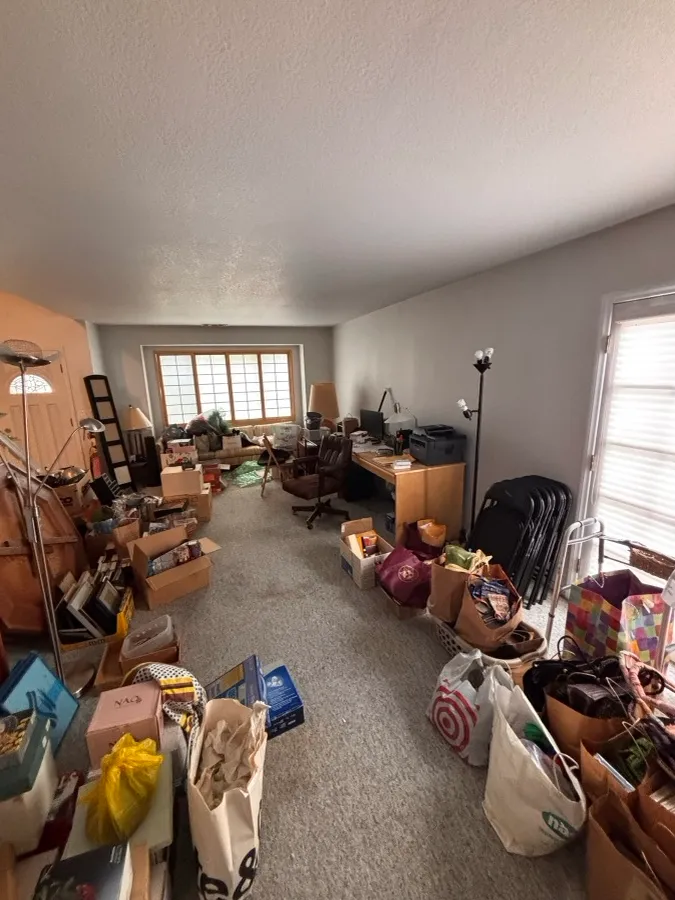
That last point gets overlooked. A house valued as though it were in good condition, when it actually needed a new roof and had forty years of belongings inside, starts you from a number that does not reflect reality. Document the condition while you can still see it.
What California Adds
Two things worth knowing, both of which your CPA will confirm for your situation.
- California has no separate state inheritance tax. Receiving an inherited house is not itself a California taxable event.
- California does tax capital gains, and it taxes them as ordinary income rather than at a separate preferential rate. So the state and federal pictures differ in shape, not just in percentage.
There is also a property tax question that is separate from income tax and frequently confused with it. Whether an inherited home keeps its existing property tax assessment depends on rules that changed in recent years and that turn on how the property is used after the transfer. That is a question for the county assessor and your advisor, and it has nothing to do with capital gains.
When Several Heirs Share the House
Each person inherits a share, and each person has their own tax situation. One sibling may be in a different bracket from another. One may have lived in the house and another may not.
The practical consequence is that the right answer for the family is not always the right answer for each individual, and the conversation goes better when everyone knows that before the arguing starts. One shared CPA conversation early is cheaper than three separate ones later, plus a dispute.
Gallinelli (2016) gives the discipline that applies to all of it: decide on the financial measures rather than on sentiment about the property. Get the numbers, including the tax numbers, from the person qualified to produce them, then decide.
Questions to Take to Your CPA
Copy these into the email you send before the meeting. It will save you an hour.
- What is my basis in this property, and what documentation do you need from me to establish it?
- Does the estate need to file Form 706, and does an alternate valuation election make sense here?
- How do the costs of sale and any improvements affect the calculation?
- How is my share treated if several of us inherit together?
- What is the California treatment, and what should I set aside?
- Does the timing of the sale change any of your answers?
What I Can and Cannot Help With
What I cannot do is tell you what you will owe. Nobody should, except your CPA, looking at your return. Take my number to them. Start at Sell an Inherited House in Los Angeles.
Conclusion
The fear that brings people to this question is usually a bigger number than the reality, because the fear is calculated against the wrong starting point.
Learn the word basis. Get the date of death value documented while it is still easy. Then take both to a CPA and let them do the part that requires a licence. The house decision gets much simpler once the tax question stops being a guess, and in my experience it is the guessing rather than the tax that keeps families stuck.
Nothing in this article is tax or legal advice. Talk to your own CPA or tax attorney about your situation, and I will work with whatever they tell you.
About the Author
Jose Schnaider grew up in the San Fernando Valley and has spent 11 to 12 years in Southern California real estate. He has bought more than 1,000 houses, including inherited ones, across Los Angeles, Orange and Ventura counties. He is a licensed California real estate agent. He is not a CPA, a tax attorney or an attorney of any kind.
Rapid Close SoCal, LLC buys houses as an investor, for its own account, for profit and resale. It is not a licensed real estate brokerage and is not your agent. Listing and agency services are provided separately by Jose Schnaider, licensed California real estate salesperson, DRE number 01975968, under Dream Team Real Estate Consultants Inc, and only under a signed listing agreement. Nothing here is legal, tax or financial advice. Talk to your own attorney or CPA, and I will work with whatever they advise.
Related Reading
- How Long Does Probate Take in California? (And How to Sell Sooner)
- The California Probate Sale Process, Explained Step by Step
- Selling a House Held in a Trust in California
- Sell an Inherited House in Los Angeles
Sources
- Gallinelli, F. (2016). What every real estate investor needs to know about cash flow… and 36 other key financial measures. McGraw-Hill Education.
- Internal Revenue Service. (n.d.). Gifts and inheritances: Frequently asked questions.
- Internal Revenue Service. (2025). Publication 551: Basis of assets.
Common questions
Do I pay capital gains tax if I sell an inherited house right away?
Often there is little or no gain, because basis for inherited property is generally the fair market value on the date of death (Internal Revenue Service, n.d.). Sell near that value and the two numbers are close. Your CPA has to confirm your situation.
Do you pay capital gains on an inherited house?
Only on gain above your basis, not on the full sale price. Because basis is generally the date of death fair market value rather than what the deceased paid, the gain is usually far smaller than people expect. Ask your CPA to run it.
What is stepped up basis?
It is the common name for the rule that sets the starting value of inherited property at its fair market value on the date of death, rather than its original purchase price (Internal Revenue Service, n.d.). It is why inherited houses often produce little taxable gain.
How do I prove the value of an inherited house at the date of death?
With a written appraisal dated to the date of death, or a probate referee appraisal if the estate is in formal probate. Keep dated photographs of the condition too. Establishing this early is far easier than reconstructing it years later.
Does California have an inheritance tax?
California has no separate state inheritance tax. It does tax capital gains, and it taxes them as ordinary income rather than at a separate rate. Property tax treatment after an inheritance is a different question for the county assessor.