Every step of selling a house through California probate, including court confirmation, overbids and timelines, in plain language.
In this post
- First, Find Out Which Authority You Have
- The Full Authority Route, Step by Step
- The Court Confirmation Route, Step by Step
- How the Overbid Formula Actually Works
- What This Does to Your Timeline
- Mistakes That Cost Estates the Most
- Where a Cash Buyer Fits, and Where One Does Not
- Get a Number You Can Take to the Attorney
- Conclusion
- About the Author
- Related Reading
Summary
- One thing decides how a California probate sale runs: whether the personal representative has full authority or limited authority.
- With full authority you can usually sell without a court hearing. You send a Notice of Proposed Action and, if nobody objects, you close like a normal sale.
- With limited authority the sale goes to a confirmation hearing where someone else can outbid your buyer in the courtroom.
- The minimum overbid is set by formula: 10 percent of the first $10,000 plus 5 percent of the rest.
- If the appraisal is more than a year old at the hearing, the property has to be reappraised.
- Find out which authority you have before you accept an offer. It changes everything that follows.
A California probate sale runs one of two ways. With full authority, the representative sells without a court hearing after serving a Notice of Proposed Action. With limited authority, the sale must be confirmed by a judge at a hearing where higher bids can be made.
That single distinction decides whether your buyer is safe or whether a stranger can take the house out from under them in a courtroom. Most people selling an inherited house do not know which one applies to them until something goes wrong.
I buy inherited houses across Los Angeles, Orange and Ventura counties, including through probate. I am not an attorney and this is general information, not legal advice. Probate is a court process, so your probate attorney has the final word on your estate.
First, Find Out Which Authority You Have
When the court appoints a personal representative, it grants a level of authority. There are two, and they behave completely differently when a house is involved.
| Full authority | Limited authority | |
|---|---|---|
| Selling real property | Usually without court supervision | Cannot sell without court supervision |
| What you serve | A Notice of Proposed Action | A petition and a hearing |
| Court hearing | Not normally needed | Required |
| Overbids | No. The sale is not presented for higher bids | Yes. Higher bids may be presented at the hearing |
| Certainty for your buyer | High | Low until the hearing is over |
The California Notice of Proposed Action form states the distinction directly: a representative with limited authority cannot, without court supervision, sell or exchange real property, grant an option to purchase it, or borrow money secured by the property (Judicial Council of California, 2024a).
The same form carries the line that matters most to a buyer. A sale made without court supervision will not be presented to the court for confirmation at a hearing where higher bids for the property may be presented (Judicial Council of California, 2024a).
So the first question is not what the house is worth. It is which box was ticked when the court appointed you. Your attorney can tell you in a minute from the Letters.

The Full Authority Route, Step by Step
- Get the property appraised. A probate referee usually values estate property as part of the Inventory and Appraisal.
- Market the house and accept an offer. This looks like an ordinary sale.
- Serve a Notice of Proposed Action. It goes to everyone entitled to notice and states the action you intend to take and a date on or after which you intend to take it.
- Wait for objections. An objection has to be received before the date stated in the notice, or before the action is taken, whichever is later (Judicial Council of California, 2024a).
- Close escrow. If nobody objects, the sale proceeds without a hearing.
That fourth step carries a consequence people miss. If a person entitled to notice does not object in writing and does not get a court order, they are treated as if they consented (Judicial Council of California, 2024a). Silence counts as agreement.
The reverse is also true. If someone does object, the representative may take the proposed action only under court supervision. One letter from one unhappy relative moves your sale into the slower route.
A Waiver Can Speed This Up
There is a companion form for waiving notice of a proposed action (Judicial Council of California, 2024b). Where the heirs genuinely agree, getting signed waivers removes the waiting and the risk of a late objection. Ask your attorney whether it fits your estate.
The Court Confirmation Route, Step by Step
If you have limited authority, or if someone objected, the sale goes through the court.
- Accept an offer, subject to court confirmation. Your buyer needs to understand from the start that the deal is conditional.
- File a Report of Sale and Petition for Order Confirming Sale. This is where the appraised value, the terms and the broker arrangements are laid out.
- The court sets a hearing. Notice goes out.
- Bidding happens in the courtroom. Other buyers may appear and bid above your buyer price.
- The judge confirms a sale. To whoever ends up highest, which may not be the buyer you started with.
- Escrow closes. On the confirmed terms.
One procedural detail worth watching. If more than one year has passed between the appraisal date and the hearing, the property must be reappraised (Judicial Council of California, 2024c). In a slow estate, that is a real possibility and it can move the number the court works from.
How the Overbid Formula Actually Works
This is the part that catches people, so here is the arithmetic rather than a description.
The minimum overbid is set by formula on the Report of Sale form: 10 percent of the first $10,000 of the original bid, plus 5 percent of the amount above $10,000 (Judicial Council of California, 2024c).
Worked on a $700,000 accepted offer:
- 10 percent of the first $10,000, which is $1,000
- 5 percent of the remaining $690,000, which is $34,500
- Minimum overbid: $35,500
- So the first competing bid must be at least $735,500
Read that from both sides. If you are the seller, an overbid is not a disaster. It is a higher price for the estate. If you are the buyer who negotiated the original deal, you can lose the house after months of work, which is exactly why many buyers will not touch a confirmation sale, and why offers on them tend to come in lower.
That is the hidden cost of limited authority. Fewer buyers compete, and the ones who do price in the risk of being outbid.
What This Does to Your Timeline
| Step | Full authority | Court confirmation |
|---|---|---|
| Offer to agreement | Normal escrow pace | Normal, but conditional |
| Notice or petition | Notice period runs | Petition filed, hearing set |
| Court involvement | None, if nobody objects | Hearing required |
| Risk to the deal | An objection moves it to court | Your buyer can be outbid |
| Overall | Closest to an ordinary sale | Add weeks or months |
For the overall probate clock, and how long you will be in this process in total, read How Long Does Probate Take in California? (And How to Sell Sooner).
Mistakes That Cost Estates the Most
- Accepting an offer before knowing your authority. You may be promising something you cannot deliver.
- Not telling the buyer the sale is subject to confirmation. They find out later, they walk, and you restart.
- Letting the appraisal go stale. Past a year from the hearing, a reappraisal is required.
- Treating a Notice of Proposed Action as a formality. It is the thing that makes the sale safe. Serve it properly.
- Assuming silence means trouble. Under the rules, silence means consent.
- Leaving an empty house to sit. Every month of carrying costs comes out of what the heirs receive.
Where a Cash Buyer Fits, and Where One Does Not
Plain version. If you have full authority and the house is in good shape, list it. More buyers can bid and competition usually pays you more. That is the honest answer and it is often the right one.
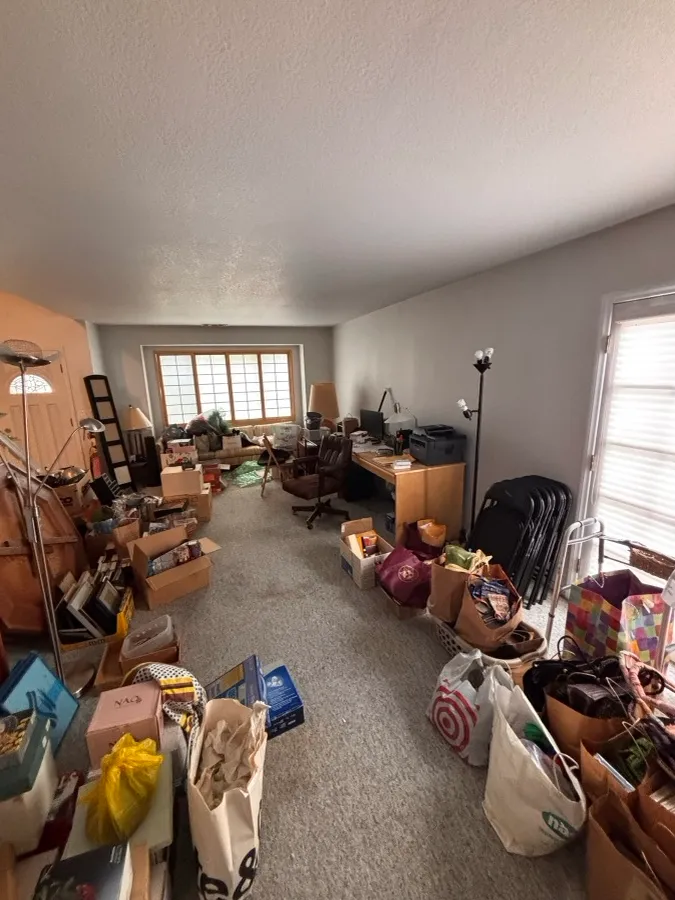
A cash buyer is worth considering when the house needs real work, when it is full of belongings nobody has sorted, when the heirs are spread across states, or when a confirmation sale has already scared off conventional buyers. Those are the conditions where a smaller buyer pool is a fact rather than a choice.
I buy in that situation and I take the house as it sits. You can leave everything inside. What I will also do is tell you when listing would net the estate more, because an estate sale that goes badly tends to be remembered by the whole family for a long time.
Get a Number You Can Take to the Attorney
You can take that number to your probate attorney and to the rest of the family, and use it whether or not you sell to me. Start at Sell an Inherited House in Los Angeles.
Conclusion
A probate sale is not one process. It is two, and which one you are in was decided at the appointment hearing, probably before anyone was thinking about the house.
Find out which authority you have. Then tell every buyer the truth about it from the first conversation. A confirmation sale handled openly closes. A confirmation sale hidden until week six falls apart, and the estate pays for the months in between.
About the Author
Jose Schnaider grew up in the San Fernando Valley and has spent 11 to 12 years in Southern California real estate. He has bought more than 1,000 houses, including inherited and probate properties, across Los Angeles, Orange and Ventura counties. He is a licensed California real estate agent, not an attorney.
Rapid Close SoCal, LLC buys houses as an investor, for its own account, for profit and resale. It is not a licensed real estate brokerage and is not your agent. Listing and agency services are provided separately by Jose Schnaider, licensed California real estate salesperson, DRE number 01975968, under Dream Team Real Estate Consultants Inc, and only under a signed listing agreement. Nothing here is legal, tax or financial advice. Talk to your own attorney or CPA, and I will work with whatever they advise.
Related Reading
- How Long Does Probate Take in California? (And How to Sell Sooner)
- Selling a House Held in a Trust in California
- Will You Owe Capital Gains Tax on an Inherited House in California?
- Sell an Inherited House in Los Angeles
Sources
- Judicial Council of California. (2024a). Notice of proposed action (Form DE 165).
- Judicial Council of California. (2024b). Waiver of notice of proposed action (Form DE 166).
- Judicial Council of California. (2024c). Report of sale and petition for order confirming sale of real property (Form DE 260).
- California Courts. (n.d.). Overview of formal probate. California Courts Self Help Guide.
Common questions
Do I need court confirmation to sell a probate house in California?
It depends on the authority granted at appointment. With full authority you can usually sell without a hearing after serving a Notice of Proposed Action. With limited authority you cannot sell real property without court supervision (Judicial Council of California, 2024a).
What is a probate sale?
It is the sale of a house belonging to the estate of someone who died, carried out by the court appointed personal representative. Depending on the authority granted, it either closes like an ordinary sale or must be confirmed by a judge at a hearing.
How does the overbid process work in a California probate sale?
At a confirmation hearing, others may bid above the accepted offer. The minimum overbid is 10 percent of the first $10,000 of the original bid plus 5 percent of the rest (Judicial Council of California, 2024c). On a $700,000 offer that is $35,500.
What happens if someone objects to a Notice of Proposed Action?
The representative may then take the proposed action only under court supervision. If nobody objects in writing and no court order is obtained, the recipient is treated as having consented (Judicial Council of California, 2024a).
Can I accept a cash offer on a probate house in California?
Yes. Cash buyers are common in probate because many houses need work and the pool of conventional buyers is smaller. With limited authority the sale still goes through confirmation and can be overbid, so disclose that to any buyer upfront.