The formula behind a cash offer, shown on a worked example, so I can tell a fair offer from a lowball.
In this post
A cash offer is the finished value of the house, minus the repairs, minus the holding costs, minus the cost to resell it, minus the buyer’s margin. There is no fixed percentage. The percentage you end up with is the output of that arithmetic, not the rule that produced it.
Summary
- Anyone quoting you a single percentage of market value is guessing. The number depends almost entirely on the repair figure.
- On a house needing little work, a cash offer can be close to market. On a gut renovation it can be far below it.
- The formula has five parts and you are entitled to see every one of them.
- The 70 percent rule is a shorthand investors use to screen deals quickly. It is not how a serious offer is built.
- A lowball is not a low number. It is a number the buyer will not explain.
- Compare a cash offer to your net from a listing, not to your asking price.
The Percentage Is the Output, Not the Rule
Search this question and you will get a number. Fifty percent of market value. Seventy percent. Somewhere between sixty and eighty. The ranges vary and all of them are close to meaningless on their own.
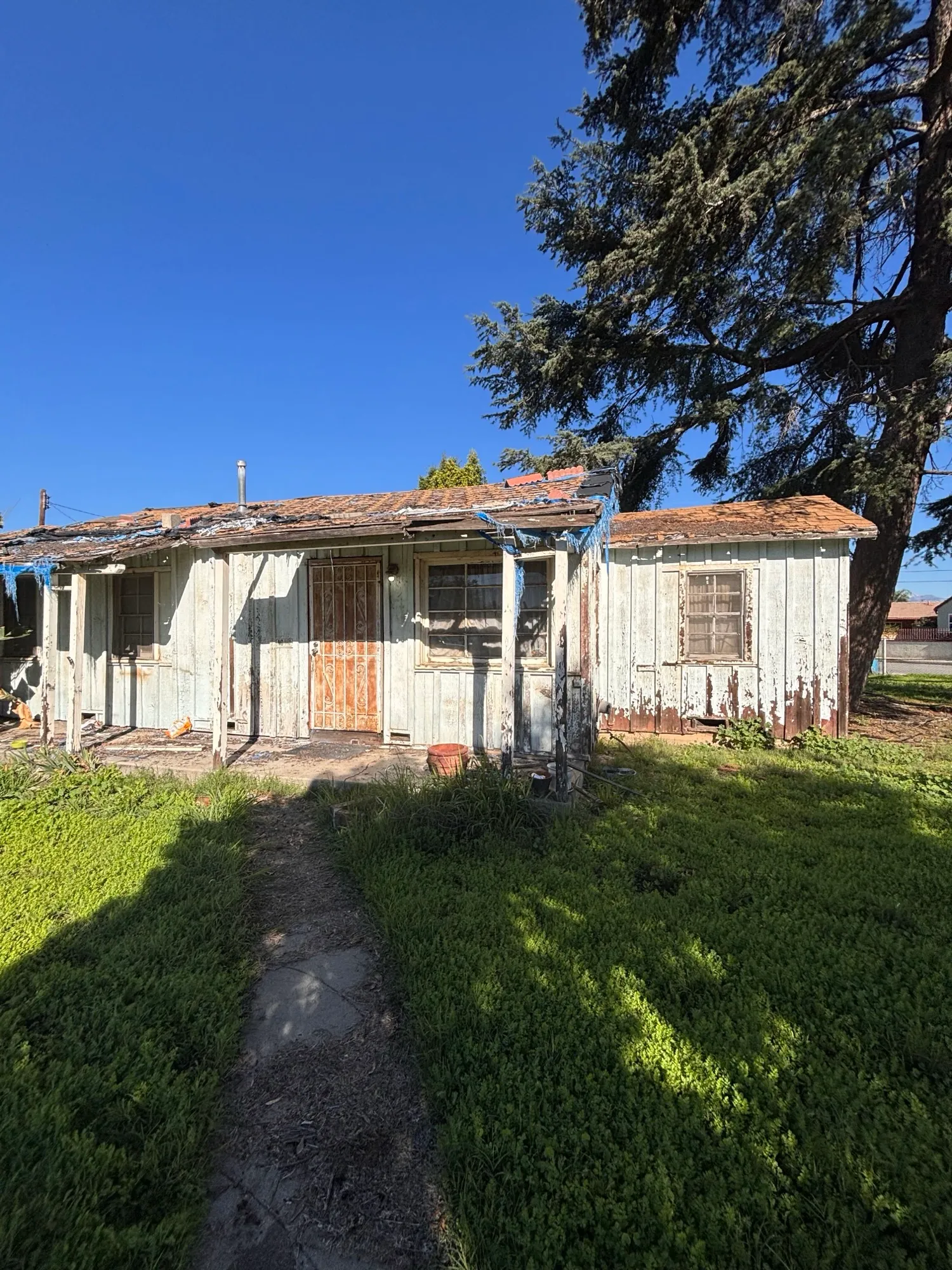
Here is why. Take two houses on the same street, both worth six hundred thousand dollars finished. One needs paint and a water heater. The other needs a roof, a foundation repair and a full interior. A buyer working from the same arithmetic will offer very different percentages for those two houses, and both numbers will be correct.
The percentage falls out at the end. It is a description of what happened, not an input to the calculation. So when someone tells you cash buyers pay seventy percent, the right response is: seventy percent of what, after subtracting what repairs?
What you actually want is not a percentage. It is the five numbers behind it, which is the rest of this page.
The Actual Formula
Every legitimate cash offer, whatever the buyer calls it, is built from these five lines.
| Line | What it is |
|---|---|
| After repair value | What the house sells for once it is finished and on the open market |
| Minus repair cost | Everything needed to get it there, including the parts nobody can see |
| Minus holding cost | Taxes, insurance, utilities and cost of money for the months of work |
| Minus selling cost | Commission, closing costs and concessions when the buyer resells it |
| Minus margin | The profit that makes the project worth doing and absorbs the risk |
| Equals the offer | What is left |
Two of those five are worth examining closely, because they are where offers differ most.
After repair value is not what your house is worth today. It is what it will be worth finished. Sellers often hear a high after repair value and feel encouraged, then feel misled when the offer is far below it. The gap between the two is the repair cost and everything else on the list. It is not a trick, it is the whole point of the arithmetic.
Repair cost is where almost all the disagreement lives. Your estimate and a buyer’s estimate of the same house can differ by a factor of two or more, and usually for legitimate reasons. A buyer is pricing a full renovation to a resale standard, with permits, with contingency for what opens up behind the walls, and at contractor rates rather than what a friend would charge. If an offer feels low, the repair line is where to look first and the question to ask is what is in it.
The 70 Percent Rule, and Its Limits
You will encounter this one, so you should know what it is and what it is not.
The shorthand is: offer equals seventy percent of after repair value, minus repairs. An investor looking at a house worth four hundred thousand finished that needs sixty thousand of work would screen it at two hundred and twenty thousand.
What the rule is for: screening quickly. An investor looking at many properties needs a way to discard most of them in seconds. The seventy percent covers selling costs, holding costs and margin in one rough bundle.
Where it misleads, in both directions:
- It ignores holding time. A three week cosmetic refresh and a nine month structural project carry very different costs, and the rule treats them identically.
- It ignores price point. A fixed percentage takes far more absolute money out of an expensive house than a cheap one, which is why the rule often produces offers that are too low at the top of the market.
- It ignores how certain the repair number is. A house with known, bounded problems deserves a different contingency from one where nobody knows what is behind the walls.
- It can also be too generous, on a house where the resale is slow or the renovation is genuinely unpredictable.
So treat the rule as a sanity check rather than an answer. If a buyer cannot go beyond it and show you the five actual lines, they have screened your house rather than priced it.
Worked Example
The figures below are a labeled illustration using round numbers, chosen to show how the arithmetic behaves. They are not a real transaction and they are not market data for any particular neighborhood. Your numbers will differ.
Take a house that would sell for six hundred thousand dollars finished, needing a substantial but not structural renovation.
| Line | Light work | Heavy work |
|---|---|---|
| After repair value | $600,000 | $600,000 |
| Repair cost | $40,000 | $160,000 |
| Holding cost | $12,000 | $30,000 |
| Selling cost | $36,000 | $36,000 |
| Margin | $60,000 | $75,000 |
| Offer | $452,000 | $299,000 |
| As a percentage of finished value | About 75% | About 50% |
Same street, same finished value, same buyer, same arithmetic. One offer is three quarters of the finished value and the other is half. Neither is a lowball and neither is generous. The difference is almost entirely the repair line.
This is why the percentage question has no useful answer in the abstract, and why the single most important thing you can do as a seller is find out what repair number a buyer is using.
Notice also what moved and what did not. Selling cost stayed flat, because it tracks the resale price rather than the condition. Holding cost rose with the length of the project. Margin rose a little, because a bigger renovation carries more risk of surprises. The repair line moved by a hundred and twenty thousand and took the offer with it.
What Moves the Number
If you want a higher offer, these are the levers that actually exist.
- Certainty about condition. Every unknown gets priced as a possible worst case. An inspection report, repair invoices, permits and an engineer’s letter all narrow the contingency inside the repair line. This is the single most effective thing a seller can do, and it costs very little.
- Access. A buyer who can see the whole property prices what is there. A buyer who cannot see the crawlspace prices what might be under it.
- Clean title. Liens do not stop a sale, but complications and delay cost money and get priced in. See selling a house with a lien on it.
- Timeline flexibility. If you can be flexible on closing, that is worth something. If you need a specific date, that is fine too, just say so early.
- Resale strength of the location. Not something you control, but it drives the after repair value, which drives everything else.
And the levers that do not exist, honestly stated:
- Cleaning or minor cosmetic work. You are not selling to someone who will live there as it is. It will be renovated regardless. Do not spend money here.
- Emotional argument. What you paid, what you owe, what you need and what the house means are real to you and do not appear anywhere in the arithmetic. I say that bluntly because sellers often spend their energy there instead of on the condition evidence that would actually move the number.
- Playing buyers off against each other. Legitimate buyers price from the same five lines. A buyer who raises sharply to win and then renegotiates after inspection has not actually offered more.
Telling a Fair Offer From a Lowball
A lowball is not defined by the size of the number. A genuinely damaged house deserves a genuinely low number. A lowball is defined by whether the buyer will account for it.
Signs the offer is built honestly:
- They show you all five lines without being pushed.
- Their after repair value is supported by recent comparable sales you can look at.
- Their repair figure is itemised at least at a category level, not a single round number.
- They inspected before offering rather than after.
- They will tell you plainly when listing would net you more.
- The number does not move after you accept.
Signs it is not:
- A percentage with no arithmetic behind it.
- A refusal to break down the repair estimate.
- An offer made without anyone looking at the property.
- Pressure to sign quickly, or an offer that expires in hours.
- A price that drops after inspection, when nothing new was found.
- Vagueness about who is actually buying and where the funds are.
That last point is its own subject, and it is the difference between a low offer and a bad actor. Our guide on whether we buy houses companies are legit covers how to vet a buyer properly, including proof of funds and what to ask about assignment.
Compare It to the Right Thing
The most common mistake sellers make is comparing a cash offer to their asking price. Those are not comparable numbers. One is net and nearly certain. The other is gross and hypothetical.
Compare like with like:
| Listing on the market | Cash sale | |
|---|---|---|
| Starting number | Asking price, which is a hope | Offer, which is a commitment |
| Commission | Typically comes out | Typically none |
| Repairs and credits | Often negotiated after inspection | None |
| Pre sale preparation | Cleaning, paint, staging | None |
| Carrying costs | Every month on the market | Weeks at most |
| Risk of falling through | Real, usually financing or appraisal | Low |
| Certainty of the date | Low | High |
Run your own version of that and you get two net figures you can honestly set side by side. Sometimes the listing still wins by a wide margin, and when it does you should list. Sometimes the gap is much smaller than the headline difference suggested, and at that point you are choosing between a slightly larger number that depends on several things going right and a slightly smaller one that does not.
Our guide on what it costs to sell a house in California itemises every line that comes out of a listed sale, which is what you need to make that comparison properly.
How We Price
I buy houses in Southern California for my own account, so here is exactly how our number is built.
- I look at the property before offering, not after. What I saw is what I priced.
- I show you all five lines, including the repair budget by category. If you think my repair number is wrong, tell me and show me why. Sometimes you are right.
- The purchase and the renovation are funded up front by me and my capital partner, and my project manager runs the work. That is why I can commit to a number rather than conditioning it on a lender.
- The number does not change after you accept unless something genuinely undisclosed turns up.
- If listing would net you more, I will tell you and show you the comparison.
And the thing I will not do. I am not going to tell you a cash offer matches what you would get on the open market, because on a house in good condition it does not and cannot. The arithmetic above explains why. What a cash offer buys you is certainty, speed, no repairs, no commission and no financing risk, and whether that is worth the difference is your call and not mine.
If the house is sound and you have time, you will usually net more by listing it, and there is a middle option worth knowing about: a renovation funded before the listing, which captures the higher finished value without you paying for the work. That is covered in how to get the most money for your house without paying for the work.
If you want a number with every line shown, reach us through our compare your options page.
Conclusion
There is no percentage. There is an after repair value, a repair cost, a holding cost, a selling cost and a margin, and whatever those five produce is the offer.
Which means the question to ask a cash buyer is never what percentage do you pay. It is: show me your five numbers. A buyer who will do that is pricing your house. A buyer who will not is either guessing or hoping you will not look closely.
And when you have those five numbers, compare them against what a listing would actually leave you after commission, repairs, concessions and months of carrying costs. Not against your asking price. That comparison is the one that tells you what to do, and it is the one almost nobody runs.
About the Author
Rapid Close SoCal, LLC buys houses as an investor, for its own account, for profit and resale. It is not a licensed real estate brokerage and is not your agent. Listing and agency services are provided separately by Jose Schnaider, licensed California real estate salesperson, DRE number 01975968, under Dream Team Real Estate Consultants Inc, and only under a signed listing agreement. Nothing here is legal, tax or financial advice. Talk to your own attorney or CPA, and I will work with whatever they advise.
Sources
- Greene, D. M. (2019). Buy, rehab, rent, refinance, repeat: The BRRRR rental property investment strategy made simple. BiggerPockets Publishing.
- Stone, M. (2019). Real estate investing for everyone: A guide to creating financial freedom. Ixia Press.
- Turner, B. (2020). The book on investing in real estate with no (and low) money down (Rev. ed.). BiggerPockets Publishing.
- California Department of Real Estate. (n.d.). Disclosures in real property transactions (RE 6).
Common questions
What percentage of market value do cash buyers offer?
There is no fixed percentage. The offer is finished value minus repairs, holding costs, selling costs and margin, so the percentage is whatever that arithmetic produces. A lightly worn house can come in near market, a gut renovation far below it.
How much do cash home buyers pay?
They pay the after repair value of the house minus the renovation cost, the months of holding cost, the cost of reselling it and their margin. Ask any buyer to show you all five of those lines.
Why is a cash offer lower than what my house is worth?
Because the offer is based on what the house will be worth finished, minus what it costs to get it there. The difference is the renovation, the carrying costs during it, the resale costs and the buyer's margin.
Do cash home buyers lowball sellers?
Some do. The test is not whether the number is low but whether the buyer will explain it. A buyer who shows itemised repair costs and supporting comparable sales is pricing your house. One quoting a flat percentage is not.
Is the 70 percent rule how cash offers are calculated?
It is a screening shortcut, not a pricing method. It bundles selling costs, holding costs and margin into one figure, which ignores how long the project takes and how certain the repair estimate is. Serious offers use the full five lines.