What a Notice of Default means, exactly how many days I have before the auction, and the options still open at each stage in California.
In this post
- What a Notice of Default Actually Is
- Reading the Dates on the Document
- Your Timeline From Today
- What to Do in the Next Seven Days
- Why Strangers Suddenly Know Your Business
- What This Document Does Not Mean
- Call a Housing Counselor Before You Call Any Buyer
- If Selling Turns Out to Be the Answer
- Conclusion
- About the Author
- Related Reading
Summary
- A Notice of Default is the first formal step of a California foreclosure. It is not an eviction notice and it does not mean you are losing the house this month.
- It starts a 90 day cure period. Only after that can a Notice of Sale be recorded, and the sale must be at least 21 days after that.
- So from the day it is recorded, you usually have about 111 days at minimum before an auction. Often more.
- It is a public record, which is why the letters and calls from strangers start arriving. Most of those are not help.
- Your most useful first phone call is to your servicer for a written reinstatement quote. Your second is to a free housing counsellor.
A Notice of Default starts a 90 day cure period. After those 90 days a Notice of Sale can be recorded, and the auction must be at least 21 days after that. From the recording date, you usually have about 111 days at minimum, and in practice longer.
If the document is in front of you right now, read the next sentence carefully. This is not an order to leave, and nobody is coming to the door. It is the opening of a legal clock, and almost every option you have is still available today.
I have sat with owners holding this exact document more times than I can count. Here is what it says, what the dates on it actually mean, and what to do in the next week. This is general information, not legal advice. Talk to a licensed California attorney about your situation.
What a Notice of Default Actually Is
California uses nonjudicial foreclosure. Your lender does not sue you. Instead, if your deed of trust contains a power of sale clause, a trustee starts the process by recording a document with the county recorder. That document is the Notice of Default (Merrill, 2014).
Three things follow from that.
- It is recorded, not served. It goes into the county record. A copy is mailed to you by certified mail within 10 business days of recording (California Courts, n.d.).
- It is public. Anyone can look it up, which is why your mailbox is about to fill with offers from people you have never met.
- It starts a clock rather than ending one. The 90 day cure period begins here.
It also means something did not happen earlier. Before recording, your lender was required to contact you to discuss alternatives, and then wait before recording anything (California Courts, n.d.). If that conversation never felt like it happened, that is worth raising with an attorney.
Reading the Dates on the Document
The page itself is dense and unfriendly. Three things on it matter to you.
| What to find | Where it sits | Why it matters |
|---|---|---|
| The recording date | Stamped by the county recorder | Your 90 day cure period runs from here |
| The amount to cure | Stated as the sum in arrears | It is not your payoff. It is what brings the loan current |
| The trustee and contact | Usually the first block of text | This is who you call for a reinstatement quote, not your lender |
The amount printed on the notice is often already out of date, because fees keep accruing. Ask the trustee for a written reinstatement quote good through a specific date. Do not plan around the number on the page.
Your Timeline From Today
Counting from the recording date:
| Period | What can happen | What you can still do |
|---|---|---|
| Days 1 to 90 | Nothing can be auctioned. The cure period runs | Everything. Reinstate, apply for a modification, sell, short sale |
| Around day 90 | A Notice of Sale can be recorded, then published weekly for 3 weeks | Reinstate, pay off, sell if a buyer can fund in time |
| At least 21 days after that | The trustee sale may be held | Reinstate up to 5 days before, or pay in full up to the day |
That gives a minimum of roughly 111 days from recording to auction. Most run longer, because servicers rarely move at the statutory floor and sales are frequently postponed.
For the full arc, including the four months that passed before this document existed, read How Long Does Foreclosure Take in California? The Real Timeline.
The One Date That Closes Options Early
Your servicer must receive a complete loss mitigation application more than 37 days before a scheduled sale date for the review requirement to apply, and must then answer in writing within 30 days (Consumer Financial Protection Bureau, n.d.-a).
While a complete application is pending, the lender cannot push the foreclosure forward (California Courts, n.d.). Getting a complete file in early does two jobs at once. It asks for help and it buys time.
What to Do in the Next Seven Days
- Call the trustee and ask for a written reinstatement quote. You need the real number, good through a date, not the figure printed on the notice.
- Call your servicer and ask what loss mitigation options you qualify for. Ask them to send the application package in writing.
- Call a free housing counsellor approved by HUD. They do not earn a commission on your decision. Details below.
- Put the recording date and the 90 day mark on a calendar. Add a reminder 40 days before any sale date you later receive.
- Do not ignore the certified mail. Every subsequent document arrives the same way, and the dates on them matter.
- Decide which outcome you want. Keep the house, or exit it cleanly. Those are two different plans and they need different phone calls.
Why Strangers Suddenly Know Your Business
Within days of the recording, the letters begin. Postcards, door knocks, texts, people offering to help.
There is no mystery to it. The notice is a public record, and lists of recently recorded defaults are sold commercially. Damji (2023) describes this plainly from the buyer side: data platforms compile properties showing indicators of distress, and investors use them to reach owners before a foreclosure date.
I am one of the people who buys houses at this stage, so take this for what it is worth. Some of those letters are from people who will do exactly what they say. Some are from people who will tie up your house in a contract and shop it to someone else. The way to tell them apart is to ask for proof of funds, ask who chose the title company, and ask whether the price can change after they get inside.
What none of them can do, including me, is control your lender or the trustee. We buy houses. A purchase that closes before the trustee sale pays the lender and ends the foreclosure, and I have stopped foreclosures that way, but that is a sale, not a deal with the bank. Anyone who claims they can make your lender stop has told you something useful about themselves.
What This Document Does Not Mean
- It does not mean you must leave. Ownership does not change until a trustee sale happens, and possession is a separate process after that.
- It does not mean the amount owed is final. Fees accrue. Get a written quote.
- It does not mean you cannot sell. You can sell at any point before the sale. The loan, arrears, fees and any liens get paid from the proceeds at closing, and what is left is yours.
- It does not mean your options are gone. At this stage you still have most of them.
That last point is the one worth sitting with. A Notice of Default is the beginning of the formal process, not the end of your choices. How to Stop Foreclosure in California: Six Options Ranked by Speed lists all of them, ordered by how fast each one works.
Call a Housing Counselor Before You Call Any Buyer
Counsellors approved by HUD are free. They have no stake in which option you pick, which is more than I can say for myself or for anyone else who found your address this week.
They will read the notice with you, help you work out what you actually owe, and explain what your specific servicer offers. You can find one through the Consumer Financial Protection Bureau directory (Consumer Financial Protection Bureau, n.d.-b).
If Selling Turns Out to Be the Answer
If reinstating or a modification would serve you better, I will say that instead. Start at Stop Foreclosure in Los Angeles.
Conclusion
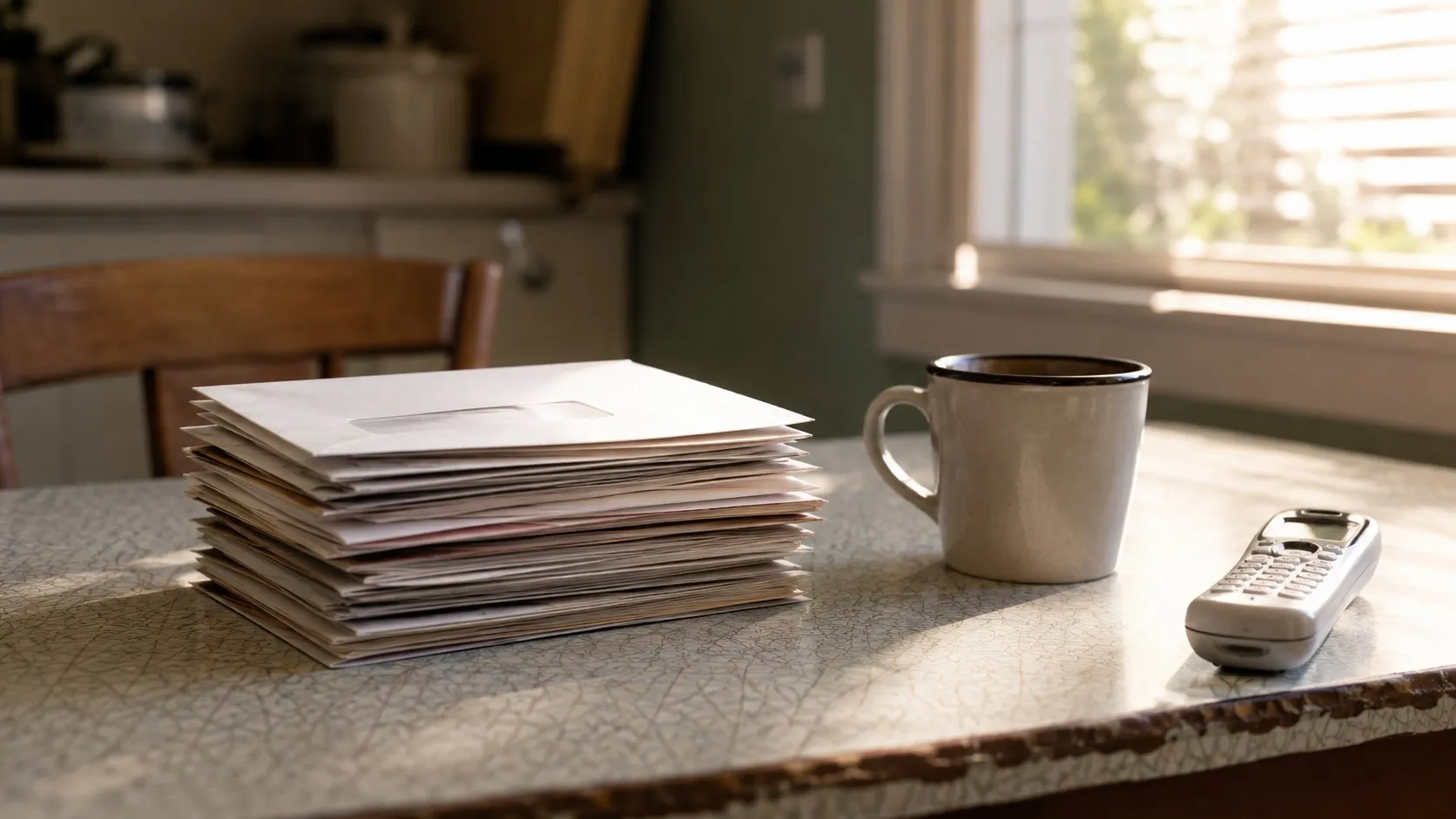
The envelope is designed to frighten you and it works. What it actually contains is a date, a number and a 90 day window, and today is the first day of that window rather than the last.
Get the reinstatement quote. Call a counsellor. Put the dates on a calendar. Then decide whether you want the house or want out, with the whole list still in front of you. In four months that list will be shorter, and it will be shorter because of time rather than anything you did wrong.
About the Author
Jose Schnaider grew up in the San Fernando Valley and has spent 11 to 12 years in Southern California real estate. He has bought more than 1,000 houses and buys in Los Angeles, Orange and Ventura counties. He is a licensed California real estate agent, not an attorney.
Rapid Close SoCal, LLC buys houses as an investor, for its own account, for profit and resale. It is not a licensed real estate brokerage and is not your agent. Listing and agency services are provided separately by Jose Schnaider, licensed California real estate salesperson, DRE number 01975968, under Dream Team Real Estate Consultants Inc, and only under a signed listing agreement. Nothing here is legal, tax or financial advice. Talk to your own attorney or CPA, and I will work with whatever they advise.
Related Reading
- How Long Does Foreclosure Take in California? The Real Timeline
- How to Stop Foreclosure in California: Six Options Ranked by Speed
- How Do Cash Home Buyers Work?
- Stop Foreclosure in Los Angeles
Sources
- California Courts. (n.d.). Your rights in a nonjudicial foreclosure. California Courts Self Help Guide.
- Consumer Financial Protection Bureau. (n.d.-a). What happens after I complete an application to determine my options to avoid foreclosure?
- Consumer Financial Protection Bureau. (n.d.-b). Find a housing counselor.
- Damji, J. (2023). How to wholesale real estate: The no cash strategy to build a scalable business. BiggerPockets Publishing.
- Merrill, T. (2014). The real estate wholesaling bible: The fastest, easiest way to get started in real estate investing. John Wiley & Sons.
Common questions
How long do I have after a Notice of Default before I lose my house in California?
Usually about 111 days at minimum. The notice starts a 90 day cure period, then a Notice of Sale must be recorded at least 21 days before the auction (California Courts, n.d.). Most cases run longer than that floor.
What is a Notice of Default?
It is the document a trustee records with the county to begin a California foreclosure. It states that you are behind, names the amount needed to cure, and starts a 90 day period during which the house cannot be auctioned.
What happens after a Notice of Default?
The 90 day cure period runs. After it, a Notice of Sale can be recorded and published weekly for three weeks, and the auction can be held at least 21 days later. You can reinstate, modify, sell or pay off throughout.
Is a Notice of Default public record in California?
Yes. It is recorded with the county recorder, so anyone can find it. That is why letters and calls from buyers and companies begin arriving within days of the recording.
Can I sell my house after a Notice of Default?
Yes. You can sell at any point before the trustee sale. At closing the loan, arrears, fees and any liens are paid from the proceeds and anything left over is yours. The constraint is time, not permission.