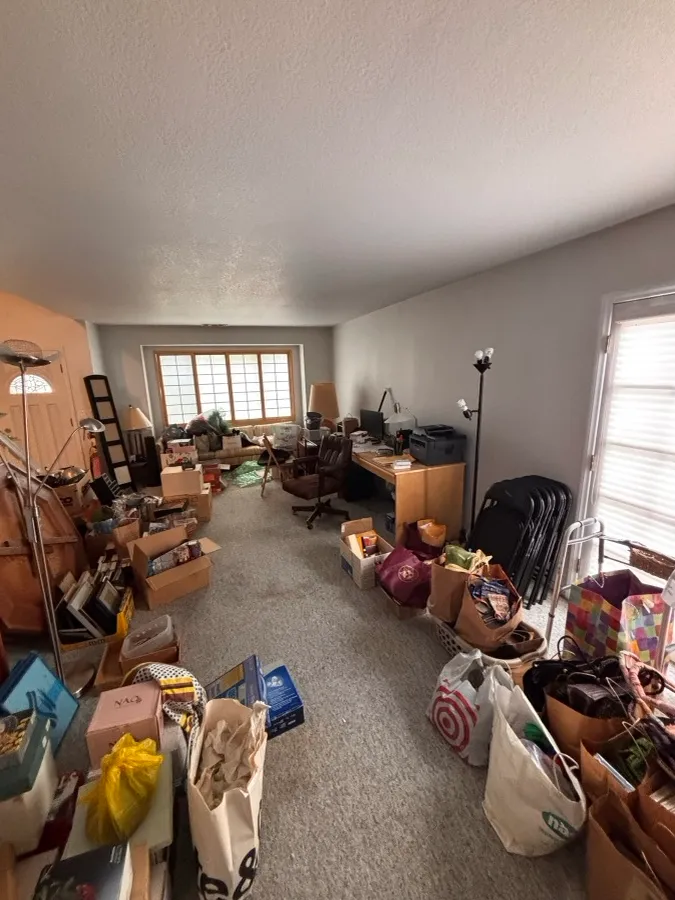

Yes, you can sell a rental property in California with tenants in it, without their permission. Here is what happens to the lease, the deposit, showings and your price.
In this post
Yes. You can sell a rental property in California with tenants living in it, and you do not need their permission. The lease goes with the house, so your buyer inherits it. What changes is not your right to sell. It is who will want to buy.
Summary
- You own the property. You can sell it. The tenant does not get a vote.
- A fixed term lease survives the sale. The buyer steps into your shoes and has to honour it.
- Wanting to sell is not a just cause reason to evict anyone in California.
- The security deposit transfers to the buyer at closing. Handle it properly or it becomes your problem later.
- You must give proper notice before entry and showings. There is a 120 day written notice that makes showings far easier.
- The real constraint is the buyer pool, not the law. Most financed owner occupant buyers will not take an occupied property.
Yes, and You Do Not Need Permission
Let me deal with the fear first, because it is the reason most people land on this page.
A tenant cannot stop you selling your property. They have no right of approval, no veto, and in most cases no right of first refusal unless your lease specifically grants one. You can list it, market it, accept an offer and close, all while they are living there paying rent.
What a tenant does have is the right to keep living there on the terms you agreed. Those terms travel with the property. You are not selling a house and then separately dealing with a tenant. You are selling a house with a tenancy attached, and the buyer takes both.
The flip side matters just as much, and it catches owners out. Because selling is not a just cause reason to evict in California, you generally cannot clear the tenant out in order to sell. Wanting a vacant property to market is not on the list of reasons the law accepts. If you are thinking the order of operations is evict first and sell second, read how to evict a tenant in California before you serve anything, because that path may not be open to you at all.
What Happens to the Lease
This is the question that decides most of what follows, and the answer depends on which kind of tenancy you have.
| Fixed term lease | Month to month | |
|---|---|---|
| Does it survive the sale | Yes, in full | Yes, as a month to month |
| Can the buyer raise rent | Not until the term ends | Only with proper notice and within limits |
| Can the buyer ask them to leave | Not during the term, absent cause | Only with just cause and proper notice |
| When does the buyer get options | At the end of the term | Subject to just cause rules |
| Effect on sale price | Longer remaining term, narrower buyer pool | More flexible, slightly wider pool |
So a buyer looking at your property with eighteen months left on a fixed lease at below market rent is buying eighteen months of that rent. They price accordingly, and that is rational rather than opportunistic.
Two practical consequences:
- Have the lease ready before you market the property. Buyers will ask for it immediately, along with the rent roll, the payment history and the deposit accounting. Not having these organized reads as a badly run property and costs you money.
- Do not sign a new long lease right before selling. It narrows your buyer pool at exactly the wrong moment. If you are within months of selling and the tenancy is coming up for renewal, think carefully before locking in a long term.
And if the tenancy is month to month with no written lease at all, that is still a tenancy and it still transfers. The absence of paper does not mean the absence of rights.
The Deposit and the Rent at Closing
This part is mechanical, it is easy, and skipping it is how sellers end up in a dispute months after they thought they were finished.
The security deposit. It is not your money and it never was. At closing it transfers to the buyer, normally as a credit, and the buyer takes on the obligation to account for it when the tenancy eventually ends. Get the amount right, in writing, and make sure escrow handles it. If a deposit goes unaccounted for, the tenant comes looking, and they will reasonably start with you.
The rent. Rent for the month of closing is prorated between you and the buyer, the same as taxes. You keep the portion covering your days of ownership.
The paperwork the buyer needs:
- The lease and any amendments or addenda.
- The exact security deposit amount and when it was collected.
- A rent roll with the current rent and the date of the last increase.
- The payment history, including any arrears.
- Any written notices served on the tenant, and any complaints received.
- Records of any deposit deductions or agreements made along the way.
Tell the tenant where to pay rent after closing. This is a legal requirement and a practical courtesy. A tenant who does not know where to send the rent is not a tenant in default. They are a tenant nobody told.
Entry and Showings: The Rules, and the Shortcut
You are allowed to show an occupied property. You are not allowed to simply turn up.
California Civil Code section 1954 governs this, and the main points are these.
- Entry to show the unit to prospective purchasers is a permitted reason to enter.
- Entry must generally be during normal business hours unless the tenant agrees otherwise at the time.
- You must give reasonable written notice stating the date, the approximate time and the purpose. Twenty four hours is presumed reasonable.
- Mailed notice is presumed reasonable if sent at least six days before entry.
- You cannot abuse the right of entry or use it to harass the tenant.
Now the part most owners do not know. If you give the tenant written notice that the property is for sale, and that you or your agent may contact them orally to arrange showings, then for the next one hundred and twenty days you may give oral notice instead of written notice for each showing. The oral notice still has to state the date, approximate time and purpose, and twenty four hours is still presumed reasonable. Whoever enters must leave written evidence of the entry inside the unit.
That single notice turns every subsequent showing from a written process into a phone call. If you are going to market an occupied property, serve it before you list.
A word on the human side. A tenant who feels ambushed by showings becomes an obstacle, and an obstacle during showings costs you far more than any courtesy would have. A tenant who was told early, treated with respect and given predictable notice usually cooperates. You are asking someone to keep their home presentable for a transaction that may end their tenancy. Ask properly.
General information, not legal advice. Local ordinances can add requirements on top of state law.
Who Will Actually Buy It
Here is the real constraint, and it is not legal. It is commercial.
| Buyer type | Will they buy occupied | Why |
|---|---|---|
| Owner occupant with a mortgage | Almost never | They need to move in, and they cannot |
| Investor using financing | Often yes | Income in place is a feature, not a problem |
| Cash investor | Yes | No lender, no occupancy requirement |
| Another landlord in the area | Yes, often the best price | Already understands the local rules |
| iBuyer or national platform | Usually not | Their models generally assume vacant |
| First time buyer | No | Occupancy and financing both block it |
Look at the first and last rows together. Owner occupants are the largest group of buyers in almost any residential market, and they are effectively removed from your pool. That is the whole reason an occupied property sells for less. It is not that the tenant is a defect. It is that your audience just got much smaller.
The useful consequence: market to the right audience. An occupied rental with a decent tenant and documented income is an attractive purchase to a landlord. It is an impossible purchase to a family looking for a home. Pricing and marketing an occupied property as though owner occupants might bite is how these sit on the market for months.
Your Three Options
| Sell occupied now | Wait out the lease | Negotiate a voluntary move | |
|---|---|---|---|
| Rent while you wait | Continues to closing | Continues, but you are waiting | Usually ends early |
| Time | Weeks | Until the term ends | Weeks to months |
| Cost to you | None | Carrying costs while waiting | A payment to the tenant |
| Buyer pool | Investors only | Full, once vacant | Full, once vacant |
| Price | Lower | Higher | Higher, minus what you paid out |
| Risk | Fewer buyers | Market moves while you wait | Tenant can decline. It is voluntary |
| Best when | You want out now | Term ends soon anyway | Tenant is willing and the gap is large |
The third column needs care. A voluntary move out agreement, sometimes called cash for keys, is exactly what it sounds like: you offer the tenant money to leave by an agreed date, and they are free to say no. Done properly it is a clean transaction that suits both sides. Done badly it becomes pressure on a tenant, which in several California cities is regulated in detail and in some circumstances creates liability for the landlord.
If your property is in the City of Los Angeles, do not attempt a buyout without reading selling a tenant occupied property in Los Angeles first. The city regulates buyout agreements specifically, including disclosures you must give and filings you must make, and an informal cash for keys deal can be void or worse.
What You Have to Disclose
California requires most sellers of one to four residential units to deliver a Real Estate Transfer Disclosure Statement, a duty beginning at Civil Code section 1102, plus disclosure of facts material to value or desirability.
On an occupied rental, the material facts include the tenancy itself:
- The lease terms, the rent and the remaining term.
- The security deposit held.
- Any arrears or payment problems.
- Any disputes, complaints or notices served.
- Whether the property is subject to a local rent stabilization ordinance, which materially affects what the buyer can do.
- Any habitability complaints or repair requests outstanding.
That fifth item is the one owners most often omit, and it is among the most consequential to a buyer. A property under rent stabilization is a fundamentally different asset from one that is not, and a buyer who discovers it after closing has a real grievance.
And note the disclosure obligations about the condition of the house do not disappear because a tenant lives there. If you know the roof leaks, you disclose the roof leaks. If condition is the bigger issue, see selling a house that needs major repairs.
How We Buy Occupied Property
I buy rental property in Southern California for my own account, with tenants in place.
- No eviction required. No vacancy required. The tenant stays and I take the tenancy as it is.
- No showings circus. I view the property once, with proper notice, at a time that works for your tenant.
- Rent keeps coming to you until closing, and I handle the deposit transfer through escrow.
- No lender deciding whether an occupied property is acceptable collateral. The purchase is funded up front by me and my capital partner.
- I take on the local ordinance obligations that come with the unit after closing.
- If your lease ends soon and waiting would clearly net you more, I will tell you and show you the comparison.
That last one comes up more than you would think. If there are six weeks left on a term and you are not under pressure, waiting and selling vacant often wins. If there are eighteen months left, or the tenancy is protected, or you need to be done, selling occupied is usually the better arithmetic.
If you want a number on an occupied property, reach us through our sell your rental property in Los Angeles page.
Conclusion
The legal question is settled and it is the easy one. You can sell with tenants in place, you do not need their permission, and the lease goes with the house.
The commercial question is the one that actually costs money. An occupied property has a smaller buyer pool, and a smaller pool means a lower price. You cannot change that by wishing. You can change how much it costs you, by having your paperwork in order, by giving the tenant proper notice and decent treatment so that showings go smoothly, and by marketing to investors rather than to families who were never going to buy it.
And before you consider removing the tenant in order to widen the pool, be clear that wanting to sell is not a reason California accepts. The route most owners imagine is not available. The one they overlook, selling it exactly as it is, usually is.
About the Author
Rapid Close SoCal, LLC buys houses as an investor, for its own account, for profit and resale. It is not a licensed real estate brokerage and is not your agent. Listing and agency services are provided separately by Jose Schnaider, licensed California real estate salesperson, DRE number 01975968, under Dream Team Real Estate Consultants Inc, and only under a signed listing agreement. Nothing here is legal, tax or financial advice. Talk to your own attorney or CPA, and I will work with whatever they advise.
Sources
- California Civil Code § 1954. Landlord entry.
- California Department of Real Estate. (n.d.). Disclosures in real property transactions (RE 6).
- Judicial Council of California. (n.d.). California tenants guide.
- Judicial Council of California. (n.d.). Types of eviction notices.
- Stone, M. (2019). Real estate investing for everyone: A guide to creating financial freedom. Ixia Press.
Common questions
Can I sell my rental property in California without evicting my tenants first?
Yes. You can sell with tenants living there and you do not need their consent. The lease transfers to the buyer. Wanting to sell is not a just cause reason to evict, so removing them first is often not legally available anyway.
Does my tenant have to let buyers see the property?
You may enter to show the unit to prospective purchasers with reasonable written notice stating date, time and purpose. Twenty four hours is presumed reasonable, and entry must generally be during normal business hours.
What happens to the security deposit when I sell?
It transfers to the buyer at closing, normally as a credit through escrow, and the buyer takes on the duty to account for it. Document the exact amount in writing so it cannot come back to you later.
Will I get less for a house with tenants in it?
Usually yes, because owner occupant buyers are removed from your pool and only investors remain. The gap narrows when the tenancy is well documented, the rent is at market and the payment history is clean.
Can the new owner raise the rent or end the tenancy after buying?
Not during a fixed term, absent cause. After it ends, or on a month to month, the buyer is still bound by just cause rules and local ordinances. Buying the property does not reset the tenant's protections.