
Sell and divide, buy out, or defer. Once a divorce petition is filed in California, neither spouse can sell alone. Here is what each option requires and where they fail.
In this post
You have three options: sell now and divide the proceeds, one spouse buys the other out, or defer the sale to a later date. Once a divorce petition is filed, you generally cannot sell without the other party’s written consent or a court order. Automatic restraining orders take effect immediately.
Summary
- Filing for divorce triggers automatic restraining orders that restrain either spouse from transferring or disposing of property.
- That means neither of you can sell the house alone. You need written consent from the other party or an order from the court.
- California is a community property state, so property acquired during the marriage is generally owned equally regardless of whose name is on the deed.
- Three paths: sell and divide, one buys out the other, or defer the sale.
- A buyout requires refinancing, which requires one person to qualify alone. That is where most buyout plans fail.
- If the house needs work or has little equity, the options narrow quickly.
This guide is general information, not legal advice, and I am not an attorney. Divorce and property division in California are genuinely complicated and the stakes are high. Everything here should be checked with your own family law attorney before you act on it.
The Restraining Orders Nobody Mentions
Start here, because acting without knowing this is how people create a serious problem for themselves.
When a divorce petition is filed in California, the summons carries standard family law restraining orders. They apply to both parties automatically. Nobody has to request them and no judge has to decide anything.
On property, they restrain both spouses from transferring, encumbering, hypothecating, concealing or in any way disposing of any property, real or personal, whether community, quasi community or separate, without the written consent of the other party or an order of the court. The exception is dispositions in the usual course of business or for the necessities of life.
Selling the family home is not the usual course of business. So in plain terms:
- You cannot list and sell the house on your own once the petition is filed.
- You cannot take a new loan against it on your own.
- You cannot transfer it into someone else’s name.
- You cannot change the title to remove survivorship rights without filing and serving notice.
The orders also require each party to notify the other at least five business days before incurring extraordinary expenditures, and to account to the court for them afterwards. They stay in effect until the petition is dismissed, a judgment is entered, or the court orders otherwise.
What this means practically is that the question is not really whether you are allowed to sell. It is whether you and your spouse can agree, and if you cannot, whether a judge will order it. Any plan that depends on moving quickly without the other person is not a plan.
Do Both Spouses Have to Agree?
Mostly yes, and the exceptions are narrower than people hope.
| Situation | Can one spouse sell alone | What is needed |
|---|---|---|
| Before any petition is filed | Depends on title and ownership | Both owners on title must sign |
| After the petition is filed | Generally no | Written consent of the other party, or a court order |
| Both agree to sell | Yes | A written agreement, and normally both signatures |
| One refuses | Not unilaterally | A court order directing the sale |
| House is one spouse's separate property | Still restrained after filing | Consent or a court order |
Note the last row, because it surprises people. The restraining orders cover separate property too, not just community property. Owning the house before the marriage does not let you sell it freely once a petition has been filed.
And note the first row. Before anything is filed, the ordinary rules of title apply. If both of you are on the deed, both of you sign. If only one of you is on the deed, that is still not the end of the question, because California community property rules can give the other spouse an interest regardless of whose name appears. That is exactly the kind of question to put to an attorney rather than to a search engine.
Who Actually Owns the House?
California is a community property state, and the general principle is straightforward even though the application rarely is.
Community property. Generally, property acquired during the marriage, owned equally by both spouses. The name on the deed does not control this by itself.
Separate property. Generally, property owned before the marriage, or received during the marriage by gift or inheritance.
Where it gets complicated, and where you should expect to need professional help:
- Mixed character. A house bought before the marriage but paid down with income earned during the marriage has both characters in it.
- Separate property contributions. A down payment made from separate funds into a community property purchase can create a reimbursement claim.
- Improvements. Community money spent improving separate property, or the reverse.
- Title versus character. How title is held and how the law characterizes the property are different questions and they do not always match.
Do not try to resolve these yourself, and do not assume the answer is obvious because of whose name is on the deed or who made the payments. This is the single most common source of expensive disagreement in a California divorce involving a house.
Your Three Options
| Sell and divide | One buys the other out | Defer the sale | |
|---|---|---|---|
| Who ends up with the house | Neither | One spouse | One spouse, for now |
| Financial separation | Complete | Complete once refinanced | Incomplete. You stay linked |
| Main requirement | Agreement, or a court order | One spouse qualifying alone | Agreement, or a court order |
| Main obstacle | Agreeing on price and timing | Refinancing, and finding the equity | Continued entanglement |
| Best when | Neither can afford it alone | One can genuinely afford it | Children need stability |
| Biggest risk | Market and timing | The refinance fails | Disputes about costs later |
Option one, sell and divide. The cleanest. The house is sold, the mortgage and costs are paid, and the net is divided according to your agreement or the court’s order. Both of you are financially separated from the property and from each other on this asset. The friction is usually about price, timing and who handles the sale.
Option two, one buys the other out. One spouse keeps the house and pays the other for their share, almost always by refinancing into a loan in their name alone. This is the option people most often plan for and most often cannot complete, and the reason is specific: the remaining spouse has to qualify for the new loan on one income, and has to be able to fund the other spouse’s share. If either half fails, you are back to option one, often months later and in a worse market. Test the refinance early. Get a lender to confirm in writing what the remaining spouse can actually qualify for before anyone builds a settlement around it.
Option three, defer the sale. California courts can order a deferred sale of the family home, typically so that children can stay in the home and the school for a defined period, with the house sold later. It solves a real problem but leaves you financially entangled, and the agreement needs to spell out who pays the mortgage, the taxes, the insurance and the repairs, and how the eventual proceeds are divided. The disputes in deferred sales almost always come from those details being left vague.
When the House Needs Work, or There Is No Equity
The three options above assume a house in reasonable condition with meaningful equity. Plenty of divorces do not have that, and the advice changes.
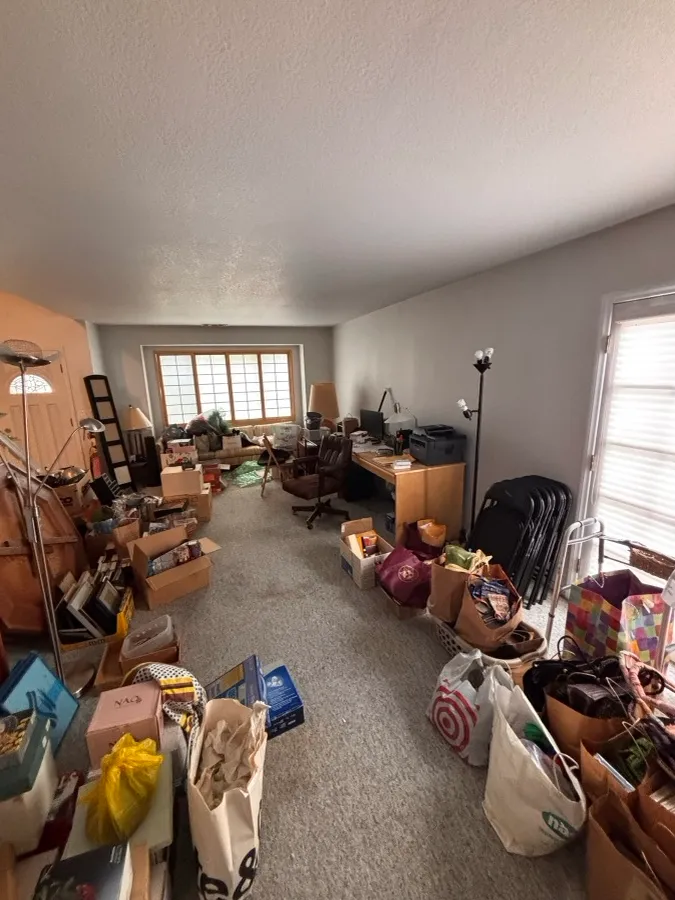
If the house needs significant repairs. A buyout becomes harder, because lenders look at condition. Listing becomes harder, because repairs require money and cooperation from two people who may not be cooperating. Many divorcing couples cannot practically agree to fund and supervise a renovation together, which is a legitimate reason to sell as is rather than a failure. Our guide on selling a house that needs major repairs covers that decision.
If there is little or no equity. There may be nothing to divide, and the question becomes who carries the shortfall. Get an attorney involved early. Do not let payments lapse while you argue, because the consequences of that land on both of you. If payments have already fallen behind, read how to stop foreclosure in California now rather than later, because that timeline runs regardless of what is happening in family court.
If one spouse has moved out and the other is not paying. This is common and it is corrosive. The mortgage does not care about the divorce. Both names on the loan means both credit records are exposed. Address it in a temporary order rather than hoping it resolves.
If the house is a rental. The tenancy has its own rules on top of everything else. See can you sell a house with tenants still living in it.
If You Cannot Agree
Sometimes one spouse wants to sell and the other will not engage. That is not a dead end, but the route is slower.
- Negotiation through attorneys. The least expensive route, and the one most cases settle through.
- Mediation. A neutral third party helps you reach agreement. Often faster and cheaper than litigating the point.
- A court order. A judge can order the family home sold and can specify the terms. This is the backstop when agreement is impossible.
One practical observation from the outside. The cost of fighting over a house is frequently larger than the difference the fight is about. Two sets of legal fees, months of carrying costs on a property neither of you is enjoying, and a market that moves while you argue. I am not qualified to tell you how to settle a divorce. I can tell you that the house is usually the asset where delay costs the most, and that both sides generally end up with less than if they had agreed earlier.
The Practical Sequence
If you have decided that selling is the answer, this is a workable order of operations.
- Talk to your attorney first, before you call an agent or a buyer. Confirm what you are permitted to do at this stage.
- Get the written agreement or the court order that authorises the sale.
- Establish value. An appraisal or a broker opinion that both sides accept removes one of the two things people argue about.
- Get a current payoff on the mortgage and any second loan or line of credit.
- Agree in writing who handles what. Who deals with the agent or buyer, who authorises repairs, who is present for access, how decisions get made.
- Agree how the proceeds will be divided and held, including whether escrow holds funds pending further orders.
- Then sell.
Step five is the one people skip and the one that causes the most grief. A sale needs decisions made quickly, and a process where every small question has to be renegotiated between two people in conflict will fall apart. Decide the decision making rules before you start.
How We Buy in a Divorce Situation
I buy houses in Southern California for my own account, and divorce is one of the situations where a straightforward cash sale often serves both sides better than a listing.
- One number, in writing, that both of you can look at and evaluate independently. No campaign to manage together.
- No repairs, no cleaning, no staging and no showings. That removes most of the points two people in conflict have to agree on.
- I work with both parties and both attorneys. I will not take instructions from one spouse about an asset you both have an interest in.
- You choose the closing date, which matters when it has to line up with a court date or a settlement.
- The purchase is funded up front by me and my capital partner, so there is no lender and no financing contingency to collapse weeks in.
- If listing would clearly net you more and you are both able to cooperate on a sale, I will tell you that and show you the comparison.
I want to be plain about the limits of my role. I am a buyer. I am not a mediator, I am not your attorney, and I will not involve myself in the disagreement. What I can offer is a transaction with very few moving parts, which in a situation with this much friction is sometimes worth more than the highest possible price.
And a firm rule on my side: I will not proceed where there is a restraining order in place and no consent or court order authorising the sale. That protects you as much as it protects me.
If you want a number, with no obligation, reach us through our sell your house during divorce in Los Angeles page.
Conclusion
The house is usually the largest asset and almost always the hardest one to divide, because unlike a bank account you cannot split it in half and walk away.
Start with what you are permitted to do. Once a petition is filed, automatic restraining orders mean neither of you can act alone on the property, and that single fact shapes everything else. Then work out what the house actually is in legal terms, because community and separate property questions change who gets what.
Then pick among three options honestly. Sell and divide if you both want out. Buy out if one of you can genuinely qualify and fund it, tested with a lender before you build a settlement around it. Defer only with the details written down.
And whichever you choose, move on it. The house is the asset where waiting costs the most, in carrying costs, in legal fees and in the simple fact that two people are paying for a home that neither of them is settled in.
About the Author
Rapid Close SoCal, LLC buys houses as an investor, for its own account, for profit and resale. It is not a licensed real estate brokerage and is not your agent. Listing and agency services are provided separately by Jose Schnaider, licensed California real estate salesperson, DRE number 01975968, under Dream Team Real Estate Consultants Inc, and only under a signed listing agreement. Nothing here is legal, tax or financial advice. Talk to your own attorney or CPA, and I will work with whatever they advise.
Sources
- Judicial Council of California. (n.d.). Summons (Family Law) (FL-110).
- Judicial Council of California. (n.d.). Divorce in California: Self help guide.
- California Department of Real Estate. (n.d.). Disclosures in real property transactions (RE 6).
- Stone, M. (2019). Real estate investing for everyone: A guide to creating financial freedom. Ixia Press.
Common questions
Do both spouses have to agree to sell the house in a California divorce?
Generally yes. Once a petition is filed, automatic restraining orders restrain either spouse from transferring or disposing of property without the other's written consent or a court order. If one refuses, a judge can order the sale.
Can my spouse sell the house without telling me?
Not after a divorce petition is filed. The standard restraining orders on the summons prohibit transferring or disposing of real property without your written consent or a court order, and they cover community, quasi community and separate property.
Who gets the house in a California divorce?
It depends on whether the house is community or separate property and on your agreement or the court's orders. California is a community property state, so property acquired during the marriage is generally owned equally regardless of the name on the deed.
Can one spouse buy out the other and keep the house?
Yes, if they can qualify for a refinance on their own and fund the other spouse's share. Test the refinance with a lender in writing before building a settlement on it, because this is where most buyout plans fail.
Should we sell the house before or after the divorce is final?
Either can work and it depends on your circumstances, taxes and agreement. Selling before can simplify division and stop carrying costs. Ask your attorney and a tax professional, since the answer turns on facts specific to you.