Selling a house with water damage in California? Learn what you must disclose, how buyers price past damage, and when repairing beats selling as-is.
In this post
- First, Which Kind of Water Damage Do You Have?
- Why Repaired Water Damage Still Costs You Money
- Do You Have to Disclose Past Water Damage in California?
- Your Buyer’s Inspector Is Going to Find It Anyway
- Repair or Discount: Running the Actual Numbers
- When Water Damage Stops Being a Water Problem
- How We Buy Houses With Water Damage
- Conclusion
- About the Author
You can sell a house with water damage in California without repairing it. Repair it when the damage is contained, the cause is fixed and the bid is small relative to what the repair adds. Sell as is when the water has been in the structure long enough that nobody can price the bottom of it.
Summary
- There are two completely different situations here: water that is still happening, and water that happened once and was repaired. They need different decisions.
- Active water is urgent. Every week it sits, the repair number grows and the buyer pool shrinks.
- Repaired water damage still has to be disclosed in California. Fixing it does not erase it.
- Buyers price water damage by the worst thing it could be hiding, not by what you can see.
- The cause matters more than the stain. A fixed cause with a visible stain is a cosmetic conversation. An unfixed cause is a structural one.
- Water damage that sat becomes a separate and more expensive problem, covered in our mold guide.
First, Which Kind of Water Damage Do You Have?
Almost every bad decision in this situation comes from treating these two as the same thing. They are not.
Active water damage means the source is still open or was only recently closed. A slab leak, a failed supply line, a roof that still lets water in, a drain under the house. The damage is ongoing and the final number is unknown because the water is still finding new places to go.
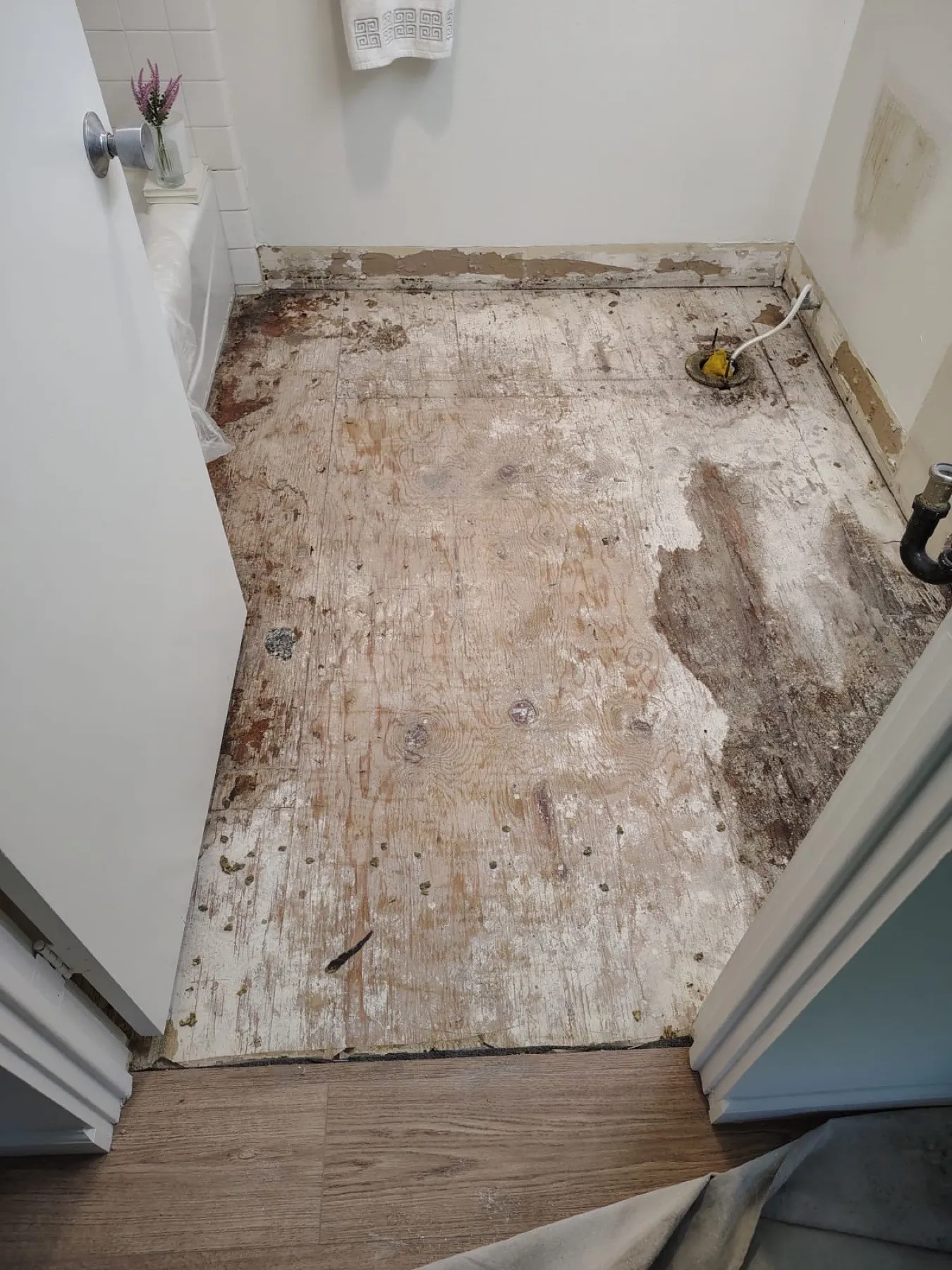
Historic water damage means the source was found and fixed, the area dried out, and what remains is the record of it. Staining, replaced drywall, a repaired section of subfloor, a line item on an old inspection report.
The decision tree splits immediately:
- If the water is active, stop the source before you do anything else, including listing. You cannot price a moving target, and neither can a buyer.
- If the water is historic, you are not managing a repair. You are managing a disclosure and a negotiation.
Sellers who skip this step end up listing an active leak, going into escrow, failing inspection and starting over with a stale listing. That is the most expensive version of this.
Why Repaired Water Damage Still Costs You Money
This is the part sellers find unfair. You fixed it. You paid for it. Why does the buyer still care?
Because water damage is the one defect where the visible evidence is a poor guide to the real condition. A buyer looking at a stained ceiling is not pricing the stain. They are pricing the range of things that stain could mean, from a one time overflow upstairs to a decade of slow roof intrusion that rotted the framing.
What a buyer is actually worried about:
- Whether the cause was really fixed, or whether somebody painted over a problem that will return the first wet winter.
- What is behind the repair. Drywall is cheap. Framing, subfloor and sill plate are not.
- Mold. Water plus time plus enclosed space is how mold starts. We cover that separately in our guide to selling a house with mold in California.
- Insurability. A property with a claims history can be harder or more expensive for the next owner to insure, and that affects what they will pay.
You close that gap with documentation, not with paint. A seller who hands over the plumber’s invoice, the moisture readings after drying, the permit and the receipt for the repair is selling a known quantity. A seller who says it was handled is selling an unknown, and buyers discount unknowns hard.
Do You Have to Disclose Past Water Damage in California?
Yes. If you know about it, you disclose it, including when it was repaired and including when it happened years ago.
California requires most sellers of one to four residential units to deliver a Real Estate Transfer Disclosure Statement. The duty sits in the Civil Code beginning at section 1102. Beyond that form, sellers and agents have a broader obligation to disclose facts that are material to the value or desirability of the property and to avoid fraud, misrepresentation and deceit. Past water intrusion is squarely a material fact.
Specific things sellers wrongly believe they can leave out:
| What sellers think | What is actually true | What to do |
|---|---|---|
| It was fixed, so it is not a defect | A repaired defect is still a disclosed history | Disclose it and attach the repair records |
| It happened before I owned the house | Known facts are known facts, regardless of when | Disclose what you know and where you learned it |
| It was only a small leak | Materiality is not measured by your opinion of size | Disclose and let the buyer weigh it |
| The insurance claim is private | Claims history is routinely discoverable | Disclose it rather than be found out |
| Selling as is covers me | As is addresses repairs, not disclosure | Disclose, then sell as is |
Two timing points worth knowing. If the disclosure reaches the buyer after the purchase agreement has been signed, the buyer has a right to terminate: three days after delivery in person, five days after delivery by mail. And if a buyer asks you a direct question, you cannot answer it falsely, even in a situation where a disclosure might otherwise be excused.
The practical advice is simple and it is not about law. Overdisclosing water damage costs you a negotiation. Underdisclosing it costs you the sale, and sometimes more than the sale. The sellers who get hurt here are never the ones who said too much.
This is general information, not legal advice. Run your specific disclosure language past a California real estate attorney.
Your Buyer’s Inspector Is Going to Find It Anyway
It is worth knowing how this gets discovered, because it explains why hiding it never works.
- Moisture meters. A pinless meter reads elevated moisture through finished surfaces. Fresh paint does not hide a wet wall.
- Infrared. Thermal imaging shows temperature differences where water sits behind drywall. It is standard equipment now, not exotic.
- Staining patterns. Inspectors read water lines the way a mechanic reads tire wear. A tide line on a baseboard tells them how high and roughly how long.
- Mismatched materials. A patch of newer subfloor, one section of replaced drywall, a single rebuilt cabinet base. These are flags.
- Smell. A closed house with a history of damp has a signature, and buyers notice it in the first ten seconds.
So the realistic choice is not between disclosing and not disclosing. It is between disclosing on your terms, with your documents, early, or having it surfaced by the buyer’s inspector in week two of escrow when you have the least leverage and the buyer has the most.
Repair or Discount: Running the Actual Numbers
Here is the test I use, and you can run it yourself on a sheet of paper.
- Get the cause diagnosed, not the damage quoted. A plumber or roofer tells you what let the water in. Until you know that, every repair bid is a guess.
- Get the repair bid for the cause and the damage separately. You want to know what stopping it costs versus what cosmetically restoring it costs.
- Ask what a finished, repaired version of your house sells for today. Your agent can tell you this in an afternoon.
- Subtract the repair, the time to do it, and the carrying cost of those months.
- Compare that against a cash number today, with no repairs and no commission.
The pattern that shows up again and again:
| Situation | Usually better to | Why |
|---|---|---|
| Cause fixed, cosmetic damage only | Repair and list | Cheap work, large perceived improvement, full buyer pool |
| Cause fixed, structural repair needed | Compare carefully | Depends entirely on the bid and your timeline |
| Cause unfixed, damage spreading | Fix the cause at minimum | You cannot sell or repair around an open source |
| Water sat long enough for mold | Usually sell as is | The scope is hard to bound and the buyer pool is already narrow |
| Damage under the slab or in the foundation | Usually sell as is | See our guide on [foundation problems](/blog/selling-a-house-with-foundation-issues/) |
One caution on the first row. Cosmetic repair before listing is the single most tempting move here, and it is the right move often enough. But if you repair the appearance without fixing the cause, you have not improved the house. You have created a disclosure problem and a future claim. Fix the cause or do not touch it.
If you are weighing repairs more broadly across the whole house rather than just this one defect, start with our guide to selling a house that needs major repairs, which lays out the fix, discount or sell as is decision in full.
When Water Damage Stops Being a Water Problem
There is a line where this changes category, and sellers should know where it is.
Water that is dried within roughly the first couple of days is usually a water repair. Water that sits in an enclosed cavity, in a warm house, with organic material to feed on, becomes a biological problem. At that point you are no longer pricing drywall. You are pricing containment, remediation, clearance testing and a buyer pool that has shrunk again.
Signs you have crossed that line:
- Musty smell that returns after the house is aired out.
- Staining that keeps reappearing through fresh paint.
- Visible growth on drywall, framing, under sinks or behind baseboards.
- A previous claim where the house was never properly dried, only patched.
If any of those are true, read selling a house with mold in California before you spend money here. The sequence matters. Remediating mold and then discovering the water source is still open means paying twice.
How We Buy Houses With Water Damage
I buy houses in Southern California for my own account, water damage included, in whatever condition they are in.
- I look at the house wet. You do not dry it, patch it or repaint anything first.
- I will tell you what I think the cause is and what I am budgeting to fix it, so you can see how the offer was built.
- The purchase and the repairs are funded up front by me and my capital partner. My project manager runs the work after closing.
- No inspection contingency games. If I see the damage before I make the offer, I do not come back later asking for a reduction because of it.
- If the repair is small and listing would clearly net you more, I will say so and show you the math.
That last point is real. A house with one stained ceiling and a fixed roof leak usually belongs on the open market, not sold to an investor. I would rather tell you that than take a deal you should not have done.
If you want a straight number on a house with water damage, you can reach us through our sell your house as is in Los Angeles page.
Conclusion
Water damage is not one problem. It is two, and they have opposite answers.
If water is still getting in, the only wrong move is to do nothing while you decide. Stop the source. Everything else gets cheaper after that.
If the water is in the past, your job is not repair. It is proof. Gather the invoices, the permits, the moisture readings and the claim records, disclose all of it plainly, and let the buyer price a known quantity rather than an imagined one. Sellers who do that get discounted once. Sellers who stay quiet get discounted twice, first in the renegotiation and again in the time it takes to put the house back on the market.
About the Author
Rapid Close SoCal, LLC buys houses as an investor, for its own account, for profit and resale. It is not a licensed real estate brokerage and is not your agent. Listing and agency services are provided separately by Jose Schnaider, licensed California real estate salesperson, DRE number 01975968, under Dream Team Real Estate Consultants Inc, and only under a signed listing agreement. Nothing here is legal, tax or financial advice. Talk to your own attorney or CPA, and I will work with whatever they advise.
Sources
- California Department of Real Estate. (n.d.). Disclosures in real property transactions (RE 6).
- California Department of Insurance. (n.d.). Residential property insurance and claims information.
- Greene, D. M. (2019). Buy, rehab, rent, refinance, repeat: The BRRRR rental property investment strategy made simple. BiggerPockets Publishing.
- Stone, M. (2019). Real estate investing for everyone: A guide to creating financial freedom. Ixia Press.
Common questions
Do I have to disclose past water damage when I sell my house in California?
Yes. Known water damage is a material fact affecting value and desirability, so it belongs on your disclosures even when the repair is finished and permitted. Attach the repair invoices and moisture readings. Repaired does not mean exempt from disclosure.
Can I sell a house with water damage without repairing it?
Yes. No California law requires repair before sale. Cash buyers and investors purchase water damaged houses routinely. If the water is still active, expect a lower offer, because an open source makes the final repair cost hard to bound.
How much does water damage reduce a home's value?
It varies too widely to quote a figure honestly. Buyers discount by the worst outcome the evidence allows, so the gap narrows sharply when you can document the cause, the repair and the drying. Undocumented damage gets priced as a worst case.
Will a buyer's inspector find water damage I painted over?
Almost certainly. Moisture meters read through finished surfaces and infrared cameras show wet cavities behind drywall. Both are standard inspection equipment. Painting over damage usually converts a price negotiation into a failed escrow.
Does homeowners insurance cover water damage before a sale?
It depends on the cause. Sudden and accidental events such as a burst pipe are commonly covered, while long term seepage and maintenance failures commonly are not. Check your policy language and ask your carrier before assuming either way.