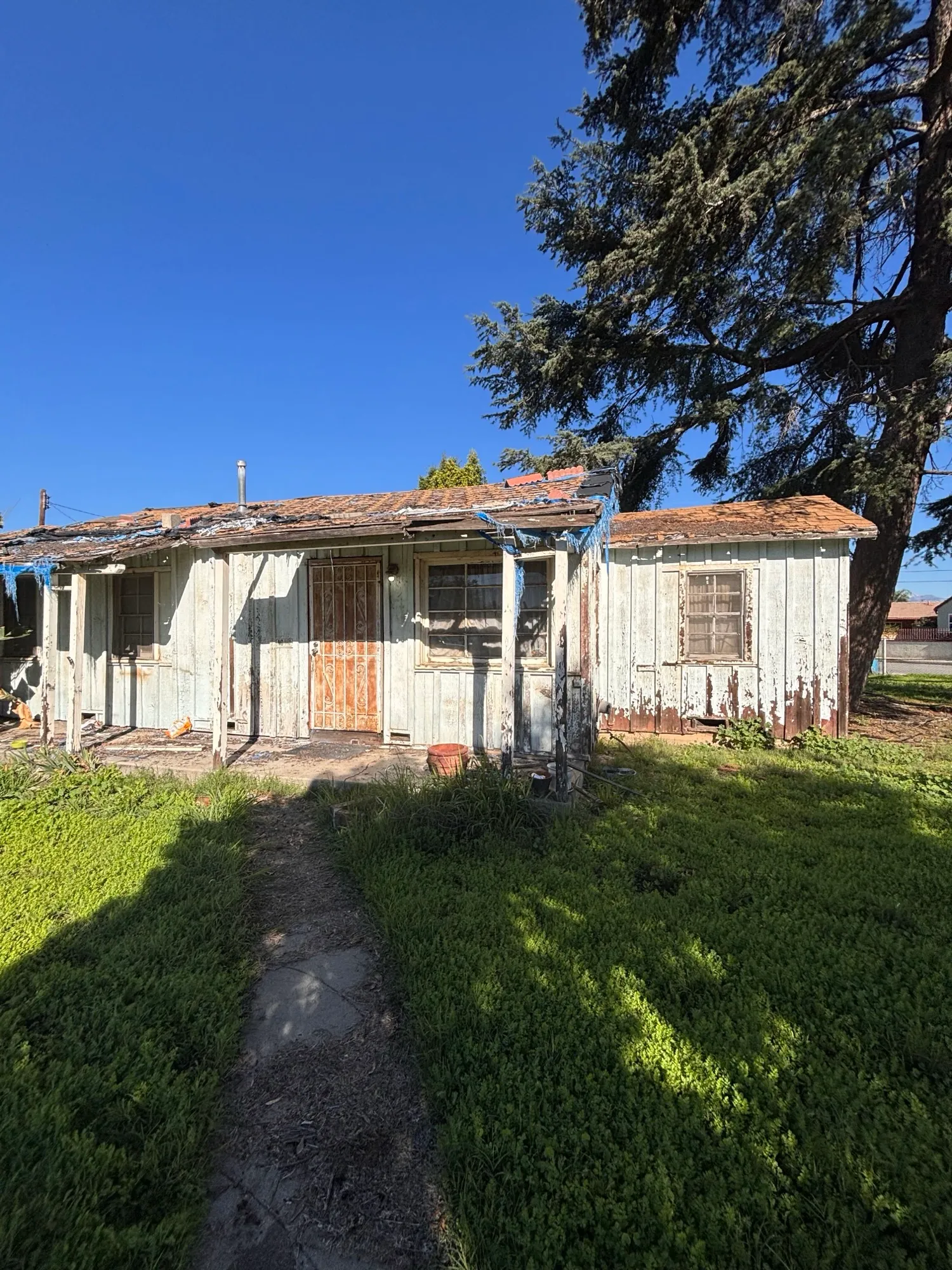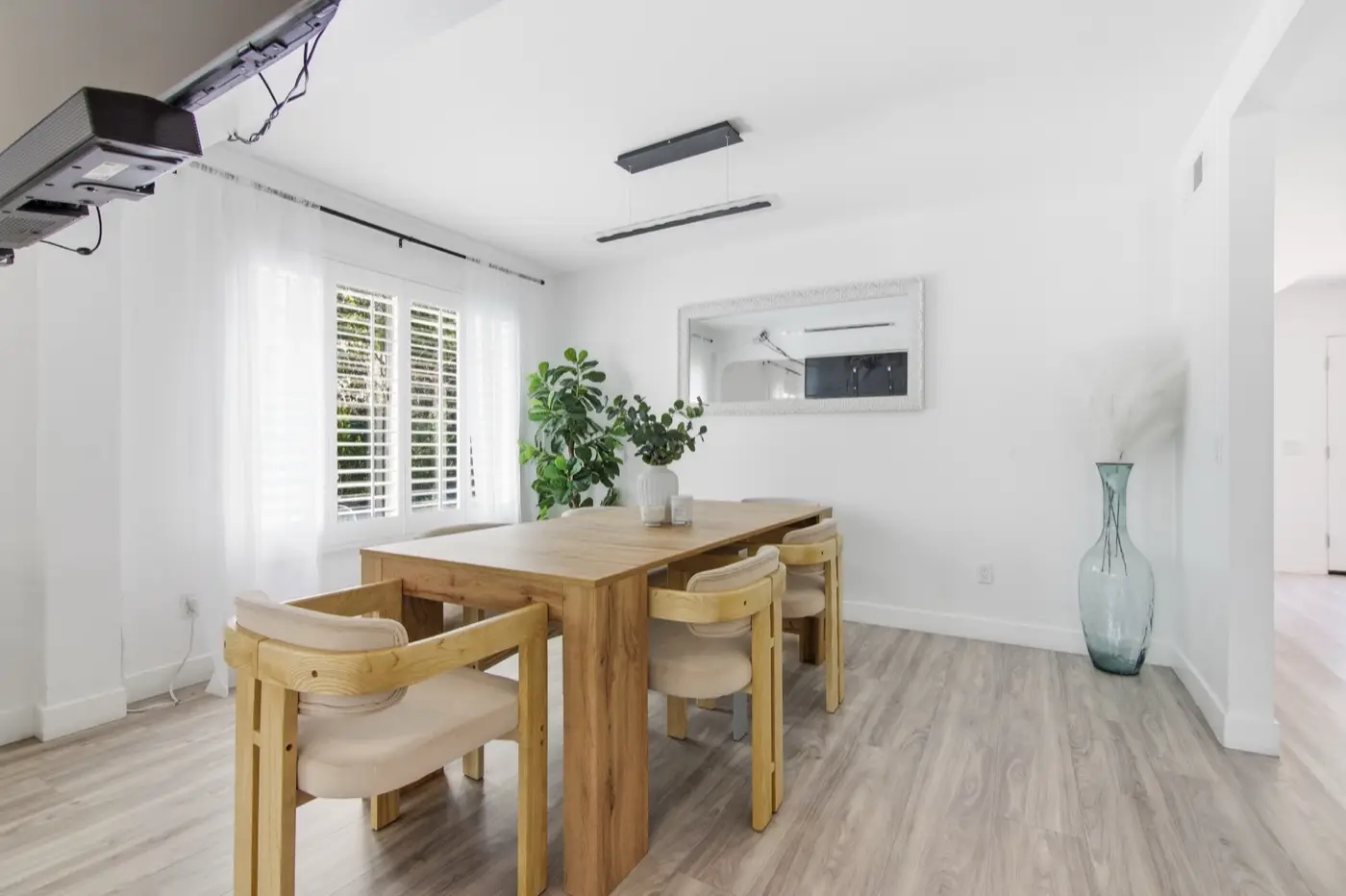
Which Southern California renovations return more than they cost, which never do, and how to renovate without spending my own money.
In this post
- The Only Calculation That Decides It
- Why the Return Tables You Found Disagree With Each Other
- What Tends to Come Closest to Paying for Itself
- What Almost Never Pays Back Before a Sale
- When Not to Renovate Before Selling
- The Three Ways to Pay for It
- A Real Southern California Example
- Get Your Two Numbers
- Conclusion
- About the Author
- Related Reading
Summary
- Renovate only when the gap between your as is price and your after repair price beats the cost of the work, the extra months and the commission on the increase.
- That gap belongs to your house. A national return table cannot tell you what it is.
- The two most quoted industry sources disagree wildly on the same projects. One puts a minor kitchen at 112.9 percent recovered, the other puts kitchens at 60 percent.
- Cheap outside work beats expensive inside work almost every time. Doors, paint, roof, curb appeal.
- If the house already shows well, or you need to be gone in two weeks, or the comps leave no room, do not renovate. Take the cash number.
- You do not have to fund it yourself. Renovation capital can go in up front and come back out of the sale proceeds at closing.
Renovate before selling only when the gap between your as is price and your after repair price beats the cost of the work, the extra months and the commission on the increase. That gap is specific to your house. No national return table can tell you what it is.
That is the whole answer. The rest of this article is how to work out your gap, which projects tend to come closest to paying for themselves, and the three ways to fund the work, including the one where the money does not come from you.
I have bought more than 1,000 houses in Southern California, and I also list them. So I see both sides of this: what a renovated house actually sells for, and what the same house would have fetched untouched. The spread between those two numbers is the only thing worth arguing about.
This is general information, not tax or financial advice. Talk to your own CPA about your situation and I will work with whatever they tell you.
The Only Calculation That Decides It
Investors do not ask whether kitchens pay back. They ask one question about one house. Damji (2023) puts it plainly: look for the property with the largest difference between its as is value and what the maximum potential could be. Greene (2019) says the same from the other direction. Once you understand what moves a property value, you know what to change in order to make it worth more.
Translate that into your kitchen table and you get a worksheet with six lines.
| Line | What goes on it | Where you get it |
|---|---|---|
| 1 | What the house sells for as it sits | Comps for unrenovated houses nearby |
| 2 | What it sells for renovated | Comps for renovated houses nearby |
| 3 | Line 2 minus line 1. This is your gap | Subtraction |
| 4 | The full cost of the work | A written contractor bid, not a guess |
| 5 | Commission and closing costs on the increase | Your agent, in writing |
| 6 | Extra carrying costs while the work happens | Mortgage, taxes, insurance, utilities, times the months |
Line 3 minus lines 4, 5 and 6 is what renovating actually earns you. If that number is not clearly positive, stop.
A Worked Example
Round numbers, invented for illustration. Put your own in their place.
- As is price: $600,000
- Renovated price: $700,000
- The gap: $100,000
- Renovation cost: $60,000
- Commission and closing on the extra $100,000 at 6 percent: $6,000
- Three extra months of carrying at $3,500: $10,500
- What renovating earned: $23,500
That is still worth doing. But notice how much thinner it got between line 3 and the bottom. Most people stop at the gap and call it their profit. The three lines underneath are where the money quietly goes.
Scott (2013) builds the same discipline into what he calls the flip formula: a sale price, then fixed costs, then rehab costs, then profit. The lesson for a homeowner is the ordering. Rehab is one subtraction out of several, and the ones people forget are the ones that decide it.
Why the Return Tables You Found Disagree With Each Other
Search this question and you will find confident percentages. Here is the problem. The two most cited industry sources, measuring the same year, do not agree.
The National Association of Realtors, working with the National Association of the Remodeling Industry, put estimated cost recovery like this (National Association of Realtors, 2025):
| Project | Estimated cost recovered |
|---|---|
| Steel front door | 100 percent |
| Closet renovation | 83 percent |
| Fiberglass front door | 80 percent |
| Vinyl windows | 74 percent |
| Basement conversion to living space | 71 percent |
| Attic conversion to living space | 67 percent |
| Complete kitchen renovation | 60 percent |
| Minor kitchen upgrade | 60 percent |
| Bathroom addition | 56 percent |
| New primary suite | 54 percent |
| Bathroom renovation | 50 percent |
Now the Cost vs. Value report from Zonda, same year, top projects by cost recouped (Zonda, 2025):
| Project | Cost recouped |
|---|---|
| Garage door replacement | 267.7 percent |
| Steel door replacement | 216.4 percent |
| Manufactured stone veneer | 207.9 percent |
| Fiber cement siding replacement | 113.7 percent |
| Minor kitchen remodel | 112.9 percent |
One source says a steel front door returns 100 percent of its cost. The other says a steel door returns 216.4 percent. One says a minor kitchen gets you 60 percent back. The other says 112.9 percent.
They are not lying. They are measuring differently, with different project definitions, different cost assumptions and different people doing the estimating. Which means the number you half remember from a blog post is not a number you can bank a $60,000 decision on.
Use them for direction, never for arithmetic. The direction they agree on is the useful part, and it is the next section.
What Tends to Come Closest to Paying for Itself
Strip away the disagreement and both sources point the same way. Cheap work on the outside beats expensive work on the inside.
- Doors. Both lists put a front door at or near the top. It is the smallest cheque on either table.
- Curb appeal generally. Zonda (2025) reported that exterior projects drove the strongest returns, with the Pacific region among the strongest regions overall.
- Paint, and a roof in good condition. These are the two things real estate professionals most often recommend before a sale (National Association of Realtors, 2025).
- Usable space you already have. Converting a basement or attic recovered more than adding square footage did.
- A light kitchen refresh, rather than a full tear out.
The pattern underneath is simple. Buyers pay for first impressions and for the absence of problems. They do not reliably pay for your taste.
What Almost Never Pays Back Before a Sale
- Full bathroom renovations. Bottom of the NAR list at 50 percent recovered.
- A new primary suite, at 54 percent, and a bathroom addition at 56 percent.
- A gut kitchen, which recovered the same 60 percent as a light upgrade costing a fraction as much.
- Anything to your personal taste. You are not the buyer.
- Pools, and anything that takes months. Every extra month is line 6 on the worksheet.
There is a reason professional buyers insist on a wide margin. Greene (2019) describes wanting his purchase price plus rehab to land near 75 percent of what the finished house will appraise for. That is a quarter of the value held back as room for error. If a full time investor demands that cushion, a homeowner doing this once should not be betting on a thin one.
When Not to Renovate Before Selling
Three situations where the honest answer is do not, and I will say so at your kitchen table.
- The house already shows well. If the paint is fresh and nothing is broken, the cash number is usually the better trade. You would be spending to fix something that is not costing you anything.
- You need to be gone in two weeks. Renovation plus a listing is months. If your deadline is real, the speed is worth more to you than the spread.
- The comps leave no room for the work. If renovated houses on your street are not selling for meaningfully more than unrenovated ones, there is no gap to capture. No amount of good work creates a ceiling the neighbourhood does not have.
There is a fourth. If you cannot stand the disruption, or you are already carrying more than you can hold, that is a real cost too. It just does not show up on a worksheet.
The Three Ways to Pay for It
This is where most of these articles stop, and it is the part that decides whether any of the above is available to you.
| How you fund it | What it costs you | Who it fits |
|---|---|---|
| Your own cash or savings | The money up front, and the risk is entirely yours | Owners with reserves who want full control |
| A loan or line of credit | Interest, plus a lender approval on a house that needs work | Owners with equity and good credit who qualify |
| Capital funded up front against the sale | A listing commission and a project management fee, and the capital comes back out of the proceeds at closing | Owners with equity but no spare cash |
The third row is what I do. The renovation is funded up front by me and my capital partner, up to $150,000, and my project manager runs the work. You do not pick tile, chase contractors or pay a contractor out of pocket. The scope, the budget, my listing commission, the project management fee and how the capital gets repaid all go in writing before you sign anything. If any of those five is missing from the paper, do not sign it. That goes for me or for anyone else.
The final sale price is a market estimate until a buyer signs. I will show you the comps behind it.
You can see the full process on the Renovate and List page.
A Real Southern California Example
A condo in South Orange County. The owner had a job transfer and cash offers from more than one buyer. He took none of them.
$36,000 went into the floors, the bathroom, the kitchen and the ceilings, funded up front rather than out of his pocket, and my project manager ran the work while he was already in Minnesota. One week on the market at $575,000. He walked away with roughly $100,000 more than the best cash offer he had been given.
Run that against the worksheet. The gap was large, the work was cosmetic rather than structural, the time on market was short, and he did not fund any of it. Four conditions, all pointing the same way. Change any one of them and the answer could have flipped to taking the cash.
Get Your Two Numbers
Then you can run the worksheet yourself. Sometimes the honest answer is a plain listing with no renovation at all. Once in a while it is keeping the house. If that is what the numbers say, I will tell you, and this ends with you better informed and me with nothing. That is an acceptable ending, and it happens more than you would think.
Conclusion
The question is not whether renovations pay. On average, most of them do not fully pay back, which is what both industry sources agree on even while they argue about the percentages.
The question is whether the gap on your specific house is wide enough to cover the work, the months and the commission with something left over. Get both comps. Get a written bid. Subtract the three lines people forget. Gallinelli (2016) gives the rule that covers all of it: decide on the financial measures, not on how you feel about the house. Then pick the path the arithmetic points at.
About the Author
Jose Schnaider grew up in the San Fernando Valley and has spent 11 to 12 years in Southern California real estate. He has bought more than 1,000 houses. He also lists homes, with renovation capital funded up front by a capital partner and a project manager who runs the work.
Rapid Close SoCal, LLC buys houses as an investor, for its own account, for profit and resale. It is not a licensed real estate brokerage and is not your agent. Listing and agency services are provided separately by Jose Schnaider, licensed California real estate salesperson, DRE number 01975968, under Dream Team Real Estate Consultants Inc, and only under a signed listing agreement. Nothing here is legal, tax or financial advice. Talk to your own attorney or CPA, and I will work with whatever they advise.
Related Reading
- How to Get the Most Money for Your House Without Paying for the Work
- Renovate and List: How the Funded Renovation Works
- Selling a House That Needs Major Repairs: Fix, Discount or Sell As Is
- How Much Does It Cost to Sell a House?
Sources
- Damji, J. (2023). How to wholesale real estate: The no cash strategy to build a scalable business. BiggerPockets Publishing.
- Gallinelli, F. (2016). What every real estate investor needs to know about cash flow… and 36 other key financial measures. McGraw-Hill Education.
- Greene, D. (2019). Buy, rehab, rent, refinance, repeat: The BRRRR rental property investment strategy made simple. BiggerPockets Publishing.
- National Association of Realtors. (2025). Should I remodel my home before I sell?
- Scott, J. (2013). The book on flipping houses: How to buy, rehab, and resell residential real estate. BiggerPockets Publishing.
- Zonda. (2025). 2025 cost vs. value report.
Common questions
Will I make my renovation money back when I sell?
Usually not all of it. The National Association of Realtors (2025) puts most projects between 50 and 83 percent of cost recovered, with a steel front door at 100 percent. You make money only when the increase in sale price beats the work, the extra months and the commission combined.
When should you not renovate before selling?
Three cases. The house already shows well, so there is nothing to fix. Your deadline is weeks rather than months. Or renovated houses nearby are not selling for meaningfully more than unrenovated ones, which means there is no gap to capture.
Is it worth renovating an old house before selling?
It depends on the gap, not the age. Price the house as it sits, price it renovated, and compare the difference against a written bid. Older houses often have the widest gaps, but also the most expensive surprises behind the walls.
What should I remodel before selling?
Start outside and start cheap. Front door, paint, roof and curb appeal recover the most of their cost in both major industry surveys. Leave full bathroom and kitchen tear outs alone unless the comps clearly justify them.
Should I remodel my kitchen before selling?
A light refresh, maybe. A gut renovation, rarely. The National Association of Realtors (2025) puts a complete kitchen renovation and a minor kitchen upgrade at the same 60 percent recovered, even though one costs several times the other.
How do I know if my house is worth renovating?
Pull two sets of comps: unrenovated sales near you and renovated ones. The difference is your ceiling. Then get a written contractor bid and subtract it, plus commission on the increase, plus the carrying costs of the extra months.