You can sell a house full of belongings in California without clearing it out. Learn why clearing first usually costs more than it adds, and what to find before anything moves.
In this post
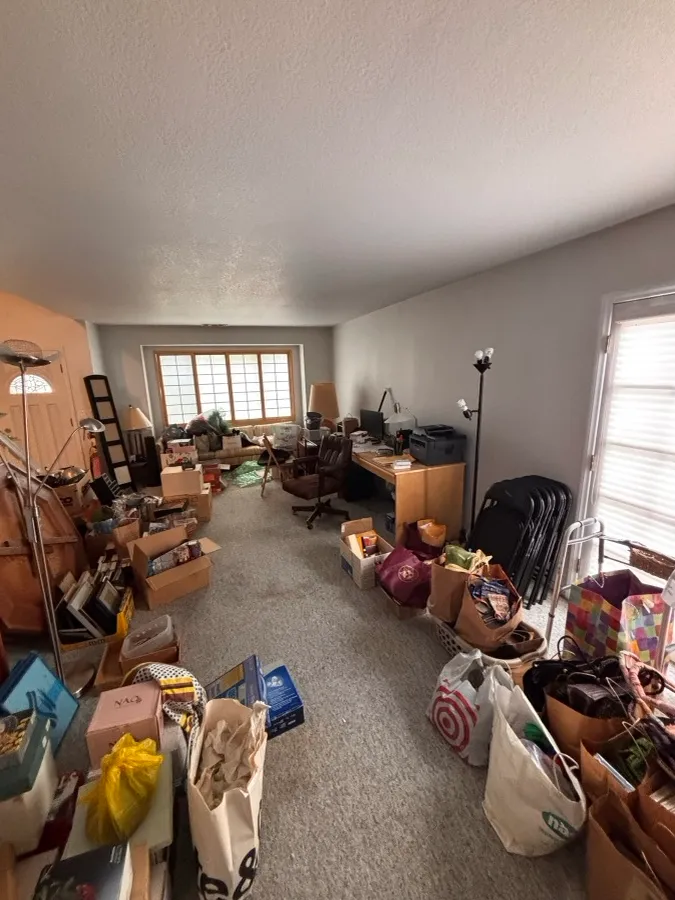
No. You do not have to clear the house out first. A property that has filled up over the years can be sold exactly as it stands, and clearing it usually costs more than it adds to the price. What matters before anything moves is finding the documents and the keepsakes.
Summary
- You can sell the property with everything still inside. Nothing needs to be removed, sorted or cleaned.
- Clearing a full house costs real money and weeks of labor, and it rarely raises the price by more than it costs.
- Before anything is moved, search for documents, cash, jewelry, photographs and anything with family meaning. People find all of these.
- The buyer is pricing the house underneath, not the contents. Contents are a line item, not the problem.
- You still disclose what you know about the condition of the house, including anything the contents have been hiding.
- If this is an inherited property, check where probate stands before you promise anyone a closing date.
The Short Answer, and Why It Is True
Most people in this situation have been told, usually with good intentions, that the house has to be emptied before it can be sold. That is not correct, and acting on it is expensive.
Here is the arithmetic that nobody walks you through.
Clearing a full property means a crew, a sequence of dumpsters, disposal fees, possibly specialist handling, and often several weeks of someone’s time. That is money out of your pocket, before you have been paid anything, on a property you may be carrying with taxes, insurance and utilities while it happens.
And what does it buy you? A clean empty house still has whatever condition is underneath. If the floors need replacing and there is water damage behind a wall, an empty house shows that more clearly, not less. You will have paid to remove the contents and then still be selling a house that needs work.
There are situations where clearing first genuinely pays. If the house underneath is in good order, if the contents are the only obstacle to a normal listing, and if you have the time and money to do it without strain, then clearing and listing can net more. That is a real scenario and I will say so later in this guide. But it is not the common one, and the common one is the reason this page exists.
Before Anything Is Moved
This is the most important section on this page, and it is the part that matters long after the sale is done.
Once a crew starts, things go into a dumpster quickly and they do not come back. Whatever you do next, do this first. Give it a weekend if you can. People routinely find things they did not know existed.
Documents to look for
- Deeds, title documents and old closing paperwork.
- Insurance policies, both property and life.
- Wills, trust documents and powers of attorney.
- Bank statements, certificates of deposit, old passbooks and savings bonds.
- Stock certificates and retirement account statements.
- Military discharge papers, which matter for benefits.
- Tax returns, particularly if the property has a long ownership history.
- Birth, marriage and death certificates.
Value that does not look like value
- Cash, which turns up inside books, envelopes, coat pockets and freezers far more often than you would guess.
- Jewelry, coins, watches and precious metals.
- Firearms, which have specific legal handling requirements in California. Do not simply move these. Ask your attorney or local law enforcement first.
- Collections that have a market, including stamps, coins, records, tools and some books.
Things that are only worth something to your family
- Photographs and photo albums. These are the ones people grieve over losing.
- Letters, journals and recipe boxes.
- Military medals, awards and certificates.
- Anything handmade, and anything with a name on it.
A practical method that works: take one room at a time, bring boxes rather than bags, and put anything you are unsure about into a keep box rather than deciding in the moment. You can decide later. You cannot undecide a dumpster.
If several family members are involved, do this part together or at least agree the rules first. Disagreements about who was supposed to keep what are the most common reason these sales become difficult, and they are entirely avoidable.
What Happens to Everything Else
Once the things that matter are out, the rest is a logistics question rather than an emotional one. You have a few routes, and they are not exclusive.
| Route | What it involves | When it fits |
|---|---|---|
| Leave it for the buyer | Nothing. It stays where it is | Selling as is to a cash buyer |
| Estate sale | A company prices and sells the contents on site | There is genuine resale value and time to run it |
| Donation | Charities collect usable furniture and goods | Items are clean, usable and accessible |
| Clear out service | A crew removes everything to disposal | You are listing on the open market |
| Family distribution | Relatives take what they want first | Always do this before any of the above |
Worth knowing: when you sell as is to a cash buyer, leaving the contents is normally fine and is priced into the offer. You are not being charged twice. The buyer has to clear it either way, so the cost sits in the number rather than in your bank account, and you do not have to arrange or supervise any of it.
Also worth knowing: take what you want. You are not obliged to leave anything behind just because you are leaving most of it. Tell the buyer which items are coming with you and get it in the contract so there is no confusion on the day.
What a Buyer Is Actually Looking At
Sellers in this situation often assume the contents are the problem. Usually they are the smaller part of it.
What a buyer is trying to work out is the condition of the house underneath, and the honest difficulty is that neither of you can fully see it. That uncertainty is what drives the number more than the volume of belongings does.
The things that are commonly found once a property is cleared:
- Flooring and subfloor damage. Long term weight and moisture under stacked contents.
- Water damage that was never addressed, because the leak was behind something. See our guide on selling a house with water damage.
- Mold, where damp and enclosed material met. Covered in selling a house with mold in California.
- Pest activity, including rodents and termites. See termite damage and your home sale.
- Systems that stopped working years ago, particularly heating, and were simply worked around.
- Blocked access, meaning electrical panels, water heaters and crawlspaces nobody has inspected in a long time.
This is why a buyer’s number on a full property carries a contingency inside it. They are pricing what might be underneath. If you have information about the condition of the house, share it, because every piece of certainty you give narrows that contingency in your favor.
What You Still Have to Disclose
Selling as is, with everything in place, does not change your disclosure duty.
California requires most sellers of one to four residential units to deliver a Real Estate Transfer Disclosure Statement, a duty beginning at Civil Code section 1102, along with the broader obligation to disclose facts material to the value or desirability of the property.
One wrinkle specific to this situation: if you inherited the property and never lived in it, you may have limited knowledge, and some transfers by an estate or trust carry exemptions from the standard disclosure form. That does not give you permission to conceal what you do know. Disclose what you know, say plainly where your knowledge ends, and do not guess in either direction. Writing that you have never occupied the property and have no personal knowledge of its condition is a legitimate and honest answer.
If the property came to you through an estate, confirm your authority to sell before you commit to a closing date. Our guides on the California probate sale process and selling a house held in a trust cover what you can and cannot do at each stage.
General information, not legal advice. A California real estate attorney can review your situation and your disclosures.
Your Options
| Clear it and list | Estate sale, then list | Sell as is, contents included | |
|---|---|---|---|
| Cost before you are paid | Clearing, plus any repairs found | Estate sale fees, then clearing | None |
| Your time | Weeks, often months | Weeks | Hours |
| Emotional load | Highest | High | Lowest |
| What gets revealed | Everything, and it is now your problem | Everything, and it is now your problem | It is the buyer's problem |
| Price | Highest, if the house underneath is sound | Middle | Lower, but no costs taken out |
| Best when | House underneath is in good condition | Contents have real resale value | House needs work, or you need this finished |
Read the fifth row carefully, because it is the one that catches people. Clearing the house does not make the problems go away. It reveals them, at which point they become repairs you have to disclose and usually repairs you have to address. More than one seller has cleared a property at significant cost, discovered the subfloor was gone, and ended up selling to a cash buyer anyway, having spent the money for nothing.
If you reach the point where the house underneath needs real work, selling a house that needs major repairs walks through that decision in full.
How We Handle These Properties
I buy houses in Southern California for my own account, and a property full of belongings is a normal purchase for me rather than an unusual one.
- I walk the property as it is. Nothing needs to be moved, cleaned or sorted first.
- Take all the time you need to find what matters to your family. I will work around your timeline rather than the other way round.
- Take whatever you want and leave the rest. We write into the contract which items are going with you.
- No photographs of the inside are published anywhere. That is a firm rule, not a courtesy.
- The purchase and the clear out are funded up front by me and my capital partner. My project manager handles the removal after closing.
- If the house underneath is in good shape and clearing it would clearly net you more, I will tell you that and show you the comparison.
I want to say something about the situation rather than the transaction, because most people reading this did not choose to be here. Often this is a parent’s house, and often the parent has recently died or moved into care. You are handling a property and a loss at the same time, usually with family opinions in the mix.
Nobody needs to be judged for the state of a house, and you do not need to apologize for it to me or to anyone else. You also do not need to prepare the property before I see it. The whole point is that you do not have to do any of this alone or in order.
If you want a number, with no obligation and no pressure, reach us through our sell your house as is in Los Angeles page.
Conclusion
The instinct to clean the house first is understandable and it is usually the wrong first move financially. The contents are not what sets the price. The house underneath is.
So put your energy where it actually counts. Go through the property carefully for documents, for anything of value and above all for the things that matter to your family, because those are the only items that genuinely cannot be replaced. Take your time with that part.
Then decide about the rest with a clear head. If the house underneath is sound and you have time, clearing it and listing may well net you more. If the house needs work, or the job is simply more than you can take on right now, selling it exactly as it stands is a legitimate decision, not a defeat.
About the Author
Rapid Close SoCal, LLC buys houses as an investor, for its own account, for profit and resale. It is not a licensed real estate brokerage and is not your agent. Listing and agency services are provided separately by Jose Schnaider, licensed California real estate salesperson, DRE number 01975968, under Dream Team Real Estate Consultants Inc, and only under a signed listing agreement. Nothing here is legal, tax or financial advice. Talk to your own attorney or CPA, and I will work with whatever they advise.
Sources
- California Department of Real Estate. (n.d.). Disclosures in real property transactions (RE 6).
- California Courts. (n.d.). Wills, estates, and probate self help.
- Stone, M. (2019). Real estate investing for everyone: A guide to creating financial freedom. Ixia Press.
- Greene, D. M. (2019). Buy, rehab, rent, refinance, repeat: The BRRRR rental property investment strategy made simple. BiggerPockets Publishing.
Common questions
Do I need to empty the house before selling it?
No. You can sell with everything still inside. Cash buyers purchase properties in this condition routinely and price the clear out into the offer. Remove what matters to your family first, then leave the rest.
Will I get less money selling a house full of belongings?
Usually yes, but less than most people expect, because the offer reflects the condition of the house rather than the volume of contents. Clearing it first costs money and time that often exceeds the price difference.
Who pays to clear out the property?
If you sell as is to a cash buyer, the buyer handles and pays for removal after closing, and that cost is reflected in the offer. If you list on the open market, you generally pay for it before the sale.
What should I look for before anything gets thrown away?
Deeds, insurance policies, wills and trust documents, bank and investment statements, military papers, cash, jewelry, firearms and above all photographs. Work room by room with boxes and keep anything you are unsure about.
Can I sell a property like this if I inherited it?
Usually yes, but your authority depends on whether the property is in probate or held in a trust, and what stage it has reached. Confirm your authority to sell before agreeing any closing date.